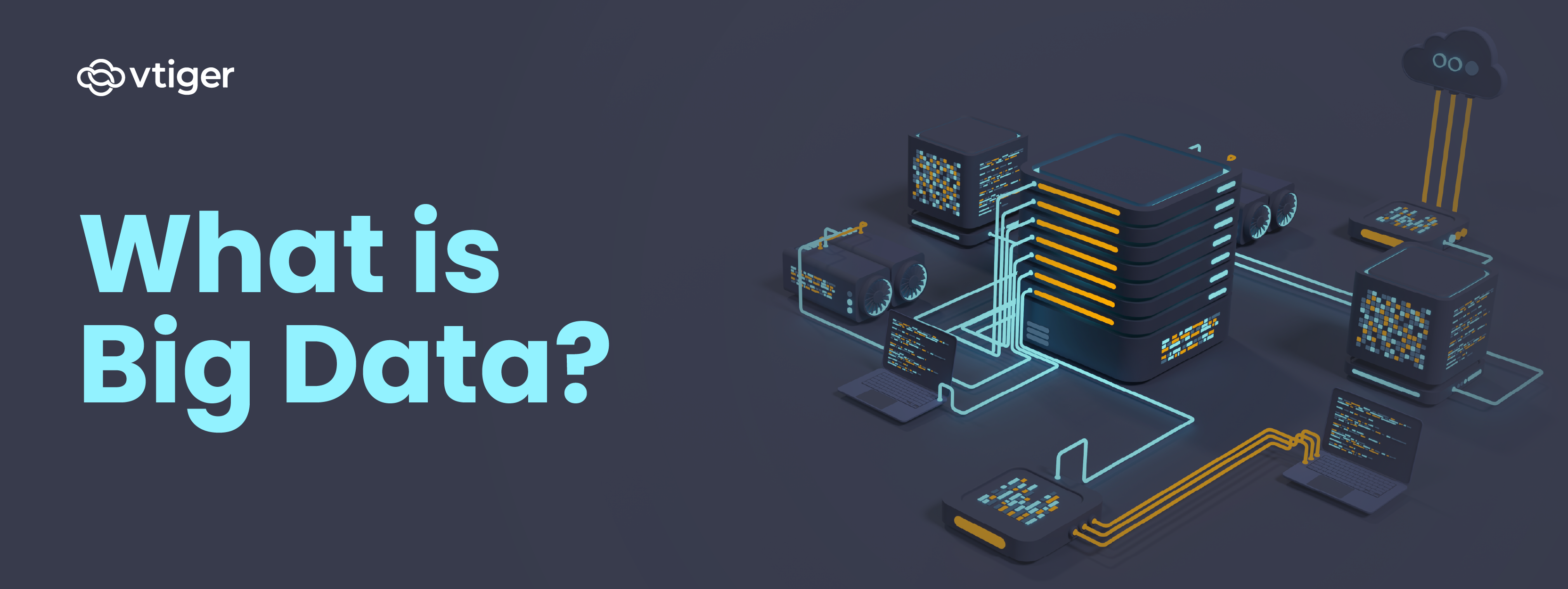
Big data is one of the most searched business technologies today, and for a good reason. Big data refers to massive, complex datasets that are structured, unstructured, or semi-structured, generated at high speed from sources like social media, IoT sensors, financial transactions, and CRM platforms. These datasets are too large and too fast-moving for traditional database tools to handle, which is why businesses turn to specialized platforms to process them and extract actionable insights.
Every time a customer clicks on a product, a hospital records a patient reading, or a logistics sensor updates a location, data is being generated. Individually, these events are small. Collectively, they form the foundation of what is called big data, and the organizations that know how to work with it consistently outperform those that rely on intuition and static quarterly reports alone.
What Is Big Data? A Proper Big Data Definition
Big data is a category of datasets so large in volume, so fast in velocity, and so varied in structure that conventional tools like spreadsheets, SQL databases, and standard business intelligence platforms cannot efficiently store, process, or analyze them.
Big data is not defined by a specific file size or a single data type. It is defined by the complexity it creates for traditional infrastructure. Three core qualities separate big data from ordinary business data. The dataset is too large to store in standard databases affordably. It arrives too fast for batch-processing systems to keep pace. And it comes in too many different formats for a single rigid schema to capture completely.
Real-world sources that generate big data every second include:
• Social media platforms produce billions of posts, comments, reactions, shares, and video streams daily
• IoT sensors tracking temperature, motion, GPS position, health vitals, and equipment status continuously
• Financial and e-commerce platforms recording every purchase, refund, cart event, and click in real time
• Server and application logs capturing system events, user sessions, error patterns, and security incidents
• Video, audio, and image content from surveillance systems, customer recordings, and product catalogs.
The entire purpose of collecting and managing big data is to extract actionable insights from raw data that would otherwise stay invisible in an unprocessed state. Big data analytics answers one core question: what patterns, predictions, and opportunities are hidden inside these massive datasets that standard reports will never surface?
Before exploring the 5 Vs of big data and how big data analytics works, it is useful to see exactly how big data differs from the traditional data most businesses have always managed:
| Aspect | Traditional Data | Big Data |
| Data Size | Gigabytes stored in spreadsheets or SQL databases | Terabytes to petabytes needing distributed cloud storage |
| Data Types | Structured rows, columns, and relational tables only | Structured, unstructured, and semi-structured data together |
| Processing Speed | Periodic batch reports are generated at fixed intervals | Real-time and near-real-time streaming as events happen |
| Tools Required | Excel, SQL, standard BI platforms | Cloud warehouses, and AI-powered CRM |
| Primary Goal | Record keeping, compliance, and basic reporting | Predictive insights, anomaly detection, and automation |
What Are the 5 Vs of Big Data?
The 5 Vs of big data is the universally accepted framework for understanding what makes a dataset qualify as big data and why it demands specialized processing infrastructure. Each V describes a distinct dimension of complexity. Together, the 5 Vs of big data define both the challenges organizations face and the opportunities available to those who overcome them.
| The V | What It Means | Real-World Example |
|---|---|---|
| Volume | Total data generated across all sources, ranging from terabytes to petabytes, rather than simple gigabytes | Every 60 seconds users send 16 million texts, upload 500 hours of video, and run 6 million Google searches globally |
| Velocity | Speed at which data is created, streamed, and processed in real time without human involvement | A modern stock exchange processes over 1 million order events per second, each needing immediate analysis |
| Variety | Wide range of formats, including structured tables, unstructured text, images, audio, video, and sensor feeds | A single retail customer generates structured purchase records, unstructured support emails, clickstream data, and social activity at the same time |
| Veracity | Degree of accuracy, consistency, and trustworthiness of collected data. Poor veracity directly corrupts insights | A contact log with duplicate contact records, inconsistent phone formats, and outdated company info produces unreliable sales forecasts |
| Value | Actual business utility extracted through analysis. Raw data without value extraction is only a storage cost | Identifying leads 80 percent likely to close this quarter based on behavioral signals, then routing them to senior reps before they go cold |
A company processing high-velocity data from live IoT feeds or financial markets needs a streaming architecture. There could also be a scenario where a company dealing with high-variety data, such as a retailer combining purchase records with social sentiment and video engagement, needs flexible ingestion pipelines that do not require rigid schemas.
Of the 5 Vs of big data, Value is the one that business leaders rightly focus on most. Volume, velocity, variety, and veracity are infrastructure concerns. Value is what justifies the entire investment. Without a clear path from raw data to a specific business decision, big data analytics becomes an expensive exercise in data collection with no measurable return.
How Does Big Data Work? The 4-Step Pipeline Explained
Big data does not arrive as a clean, labeled insight ready for a business decision. It moves through a structured processing pipeline before it becomes something actionable for a sales team, a support manager, or a marketing analyst. Understanding each stage helps organizations invest in the right tools and avoid the common mistake of jumping straight to analysis without proper infrastructure in place.
Step 1: Data Ingestion
Data collection starts at the source. A big data pipeline typically pulls simultaneously from CRM Software systems, IoT devices, mobile applications, social platforms, website interactions, third-party APIs, and legacy databases. The challenge at this stage is ingesting data from all these sources at different speeds and in completely different formats without losing context, completeness, or accuracy along the way.
Tools must handle real-time streaming ingestion from high-velocity sources. Batch ingestion tools move large static datasets from legacy databases into modern cloud infrastructure. Getting the ingestion layer right is the foundation on which every downstream step in the big data pipeline depends .
Step 2: Data Storage
Once collected, big data needs a storage infrastructure designed for its scale and variety. Organizations use data lakes to store raw, unstructured data in its original native format, preserving maximum flexibility for future analysis without committing to a schema upfront. Data warehouses store cleaned, structured datasets that are optimized for fast, repeated queries.
Cloud-based storage platforms, including AWS S3, Google Cloud Storage, and Azure Data Lake Storage, have largely replaced on-premises hardware for most businesses. The economics simply looks like: cloud storage scales elastically as data volumes grow, charges based on actual usage, and it eliminates the capital cost of purchasing and maintaining physical servers.
Step 3: Data Processing
Raw ingested data is rarely ready for analysis in its raw state . ETL pipelines, which stands for Extract, Transform, Load, clean the data, standardize formats, resolve missing values, remove duplicates, and structure it appropriately for the analytical tools downstream. This processing step directly determines the veracity of the insights that will eventually reach business teams. The choice between batch and streaming processing depends entirely on how quickly a business needs to act on the insights the data will generate once analyzed.
This is where the real value of big data analytics is created. Machine learning models detect patterns across millions of records simultaneously, finding correlations and anomalies that no human analyst team could identify manually within a useful timeframe. Statistical models quantify relationships between variables. Natural language processing extracts meaning and sentiment from unstructured text including customer emails, support tickets, and social media posts.
Visual analytics platforms translate dense model outputs into dashboards, charts, and real-time alerts that business users can interpret and act on without needing data science training. At this stage, the goal shifts from processing raw data to generating a specific, usable business recommendation.
- Which customers are likely to churn in the next 30 days?
- Which leads should a sales rep contact today?
- Which product category is heading toward a demand spike this weekend?
Step 4: Decision, Action, and Workflow Embedding
The big data pipeline only ends when an insight reaches the person or automated system capable of acting on it. The most sophisticated big data analytics has zero business impact if it remains within a data warehouse accessible only to three analysts . The final step is embedding predictions and recommendations directly into the tools business teams already use every day
Big Data Examples Across Industries
Big data in business is not a concept reserved for technology giants or companies with dedicated data science departments. It has concrete, measurable applications across industries that look very different from each other but share the same underlying challenge: too much data, moving too fast, arriving in too many formats to process with conventional tools. The big data examples below reflect real business outcomes already being achieved today.
Big Data in Retail and E-Commerce
Retailers use big data analytics to forecast demand at the individual SKU level rather than the broad category level. By analyzing browsing behavior, cart abandonment patterns, purchase history, and seasonal trends simultaneously, retail systems predict which specific products will move in which regions over the coming weeks. The outcome is leaner inventory management, fewer stockouts, and substantially reduced end-of-season markdowns.
Personalized product recommendation engines, the systems that suggest relevant products based on what similar customers bought, are powered entirely by collaborative filtering algorithms applied to big data. Customer sentiment analysis applied to reviews and support tickets helps retailers catch product quality problems early, before a pattern of negative feedback turns into a return volume problem. E-commerce CRM simplifies your process therefore.
Big Data in Healthcare
In healthcare, big data analytics directly affects patient outcomes. Electronic health records, wearable device readings, lab results, and imaging studies combine to feed predictive diagnostic models that identify high-risk patients before a condition becomes clinically critical. Early intervention programs built on these models have demonstrated measurable reductions in hospital readmission rates and emergency visit costs across multiple healthcare systems.
Staffing, equipment scheduling, and supply chain management in hospital networks also benefit significantly from big data in business applications. Predictive AI models that factor in patient admission patterns, seasonal illness trends, and procedure volumes help hospitals allocate resources before shortages occur, rather than reacting to them after they arise .
Big Data in Financial Services
Financial institutions process enormous volumes of transaction data in real time, making big data infrastructure a core operational requirement rather than an optional investment. Real-time fraud detection systems analyze hundreds of variables per transaction within milliseconds, flagging anomalies that indicate fraud before the transaction even completes, rather than catching it days later in a batch review.
Credit risk scoring models now incorporate behavioral signals and alternative data sources alongside traditional credit history, producing more accurate assessments that expand credit access responsibly without increasing default rates. Regulatory compliance teams use automated big data pipelines to generate audit-ready reporting outputs that previously required weeks of manual work by large analyst teams.
Big Data in Manufacturing
Modern manufacturing facilities deploy hundreds of sensors per production line, generating continuous data about temperature, vibration, pressure, output rates, and equipment performance. Predictive maintenance models trained on this sensor data identify when specific equipment is likely to fail and schedule service proactively, before an unplanned shutdown halts production and triggers costly emergency repairs.
Quality control systems that analyze visual and sensor data in real time flag defective units immediately on the production line, reducing waste and preventing defective products from reaching customers and triggering returns.
Big Data in Sales and CRM
• Lead scoring driven by behavioral signals, engagement history, and firmographic data rather than just form submission status.
• Pipeline forecast accuracy built on historical deal pattern analysis rather than rep-estimated close probabilities.
• Customer churn prediction from engagement drop-off signals identified weeks before a renewal becomes difficult.
• Personalized outreach sequences triggered by real-time behavioral data rather than fixed time-based drip campaigns.
Key Benefits of Big Data Analytics for Businesses
The business case for big data analytics has moved well beyond theory. Organizations across every sector are measuring real returns in reduced costs, faster revenue cycles, and stronger customer retention rates. The six benefits below represent the most consistent outcomes reported across industries that have committed to building big data capabilities.
| Business Benefit | What It Looks Like in Practice |
| Faster and More Confident Decisions | Real-time dashboards and predictive models replace guesswork with data-backed choices made in hours, not weeks |
| Stronger Operational Efficiency | Predictive maintenance, automated demand forecasting, and route optimization reduce waste and manual overhead across departments |
| Personalized Customer Experiences at Scale | Behavioral data lets teams send the right message to the right person at the right stage of the buying journey, without manual segmentation |
| Lower Business Risk | Continuous fraud detection, compliance monitoring, and anomaly spotting catch problems early, often before they cost money or damage reputation |
| Accelerated Product and Service Innovation | Usage telemetry and customer feedback data reveal gaps between what was built and what customers actually need, cutting product iteration cycles significantly |
| Sustained Competitive Advantage | Organizations acting on real-time big data analytics consistently outpace competitors still relying on quarterly static reports |
These six benefits are not independent of each other. Faster decisions reduce risk. Better personalization improves operational efficiency. Lower risk creates room for bolder product innovation. Organizations that invest seriously in big data analytics do not just solve one problem. They build a compounding operational advantage that strengthens every year as their data assets grow in volume and quality.
Big Data Best Practices for Businesses
Most big data programs that underdeliver share a common pattern: they invested in infrastructure before defining the specific business outcomes they were trying to achieve. The organizations that consistently get value from big data analytics follow a different sequence. They start with the decision they need to make, work backward to the data required to make it, and build infrastructure to serve that specific need.
1. Define Business Goals Before Building Infrastructure
The first question before any big data investment should be: what specific decision will this data help us make, and which team will act on it? Working backward from a concrete business outcome prevents the expensive and common trap of building a technically impressive data platform that no business team actually uses in their daily work. A sales team that needs better lead prioritization requires a fundamentally different infrastructure than a supply chain team that needs demand forecasting at the distribution center level.
2. Prioritize Data Quality and Governance
Poor data quality is the most common reason big data analytics programs fail to generate the expected business value. The quality of insights from any model is a direct and unavoidable function of the quality of data going in. Before scaling data collection, establish clear data standards, assign ownership for each data domain, and implement governance policies that prevent duplication, inconsistency, and format fragmentation from accumulating over time.
In a CRM context, this discipline means regular deduplication of contact records, standardized field formats enforced across all lead sources, and clear rules about which data fields are required at each stage of the sales pipeline. These disciplines pay compounding dividends as data volume grows and predictive analytics models become more sophisticated.
3. Combine Structured and Unstructured Data
Big data analytics generates its highest returns when structured and unstructured data are analyzed together rather than separately. Structured CRM records show what a customer did. Unstructured email content reveals what they said and felt. Semi-structured clickstream data shows where they went and how long they engaged. Combining all three creates customer profiles far richer and more predictively powerful than any single data type can produce in isolation.
4. Align With Elastic Cloud Infrastructure
On-premises big data infrastructure requires large upfront capital investment, long procurement cycles, and constant capacity planning to avoid both under-provisioning and expensive over-building simultaneously. Cloud-native architectures resolve all three problems cleanly. Elastic compute and storage scale up during peak analysis workloads and scale back down when demand drops, with costs following actual usage rather than theoretical capacity maximums.
For most businesses, the shift to cloud-based big data infrastructure also dramatically shortens the time between data collection and available insight, because cloud platforms provide fully managed versions of tools like Spark, Kafka, and BigQuery that eliminate weeks of configuration and ongoing maintenance work by specialized engineering teams.
5. Embed Big Data Insights Directly Into Business Workflows
The biggest gap between big data programs that succeed and those that stall is not data quality or infrastructure capability. It is adoption. When business users are required to log into a separate analytics tool, pull a report manually, or wait for an analyst to translate findings into recommendations, the insights simply do not reach decisions consistently enough to change outcomes.
Frequently Asked Questions (FAQs)
Q1. What is big data in simple terms?
Big data refers to extremely large, fast, or complex datasets that traditional tools cannot handle. Businesses use advanced analytics to extract insights, identify patterns, and make data-driven decisions efficiently.
Q2. What are the 5 Vs of big data?
The 5 Vs of big data are Volume (data size), Velocity (speed), Variety (data types), Veracity (accuracy), and Value (business insights), defining how big data is generated, processed, and utilized.
Q3. What are examples of big data in business?
Big data examples include financial transaction streams, healthcare records with wearable data, social media activity, logistics tracking systems, and customer behavior data from websites, apps, and CRM platforms.
Q4. What industries use big data analytics?
Industries using big data analytics include retail, healthcare, finance, manufacturing, logistics, telecom, media, and e-commerce, where large volumes of customer, operational, and transactional data drive insights and decision-making.
Q5. What tools are used for big data analytics?
Big data tools include Apache Hadoop, Apache Spark, Google BigQuery, Snowflake, Apache Kafka, Tableau, Power BI, and CRM platforms like Vtiger CRM with built-in AI analytics capabilities.
Q6. What is the difference between big data and data analytics?
Big data refers to large, complex datasets, while data analytics is the process of analyzing data. Big data analytics specifically handles massive datasets using advanced tools for deeper insights.
Q7. How is big data used in CRM like Vtiger CRM?
Big data in Vtiger CRM enables unified customer views, predictive insights, personalized communication, automated workflows, and improved sales and marketing decisions through real-time, data-driven intelligence.
Q8. Is big data related to artificial intelligence and machine learning?
Big data powers artificial intelligence and machine learning by providing large datasets for training models, improving accuracy, enabling automation, predicting outcomes, and enhancing decision-making across business functions.
Q9. What is the difference between big data and small data?
Small data is structured, manageable, and used for historical reporting, while big data is large and complex, enabling predictive insights, real-time processing, and proactive decision-making beyond traditional tools.