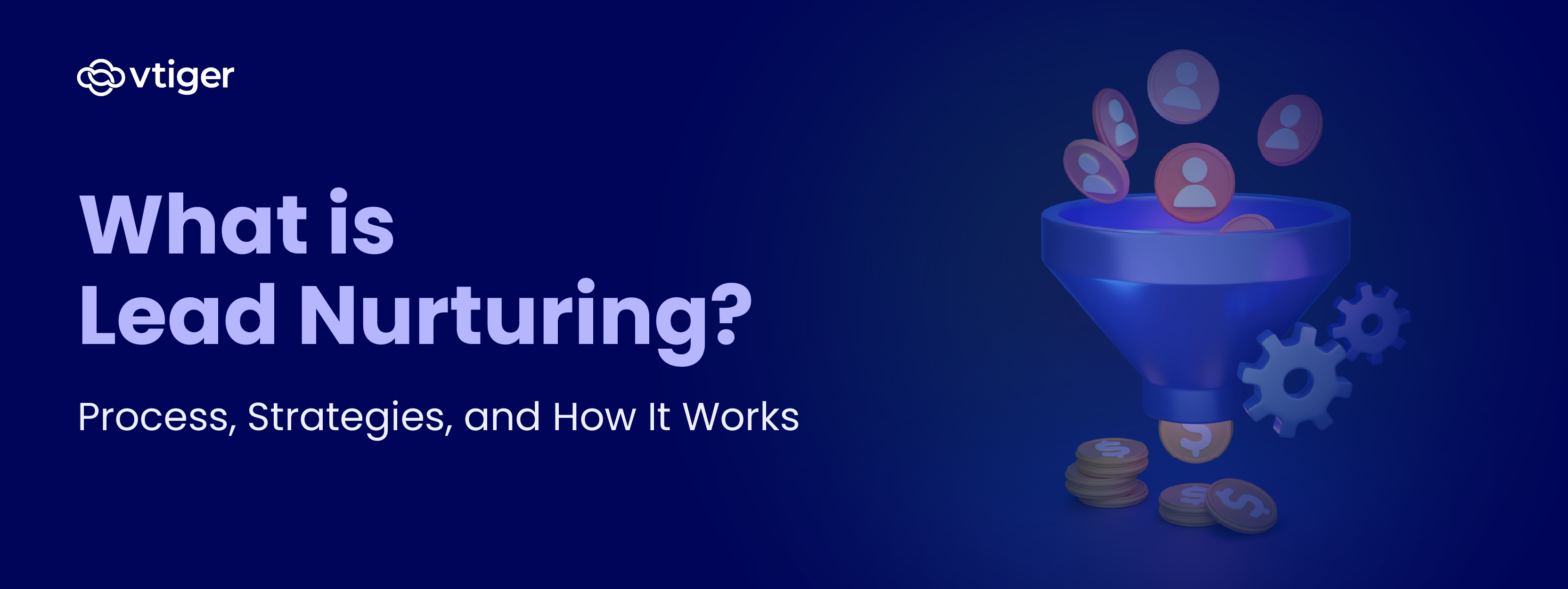
Lead nurturing is the strategic, ongoing process of building relationships with potential customers who are not yet ready to buy. Instead of pushing for an immediate sale, companies stay engaged with prospects through relevant content, personalized communication, and helpful resources that address their problems over time.
This engagement typically occurs across multiple channels, including email campaigns, webinars, social media interactions, and educational content. The goal is simple: guide prospects through the sales funnel, build trust in the brand, and gradually move them toward becoming qualified sales opportunities.
Many potential customers show interest early but need time to research, compare solutions, and gain internal approval before purchasing. Lead nurturing helps businesses stay visible throughout the decision-making journey by providing useful information at the right time. When done well, lead nurturing turns early curiosity into confident buying decisions.
What Is Lead Nurturing?
Lead nurturing refers to the continuous engagement of potential buyers through personalized communication and relevant content. Rather than focusing only on generating leads, businesses focus on helping prospects understand their challenges and evaluate solutions.
Most buyers today do not convert during their first interaction with a brand. They often spend time researching, comparing alternatives, and discussing options with internal stakeholders before making a decision. Lead nurturing ensures that companies remain helpful and present during this research phase.
Effective lead nurturing typically involves:
- Ongoing engagement with potential buyers
- Personalized communication based on interests and behavior
- Multi-channel interaction across email, web, and social platforms
- Content that addresses real customer pain points
- Gradual movement through the sales funnel
Instead of pushing prospects toward an immediate purchase, lead nurturing focuses on educating and supporting them until they are ready to move forward.
In practical terms, lead nurturing turns “not-ready” leads into sales-qualified opportunities by building trust and delivering useful information throughout the buyer journey.
Why Is Lead Nurturing Important?
Studies from Forrester research suggest that companies that excel at lead nurturing generate 50% more sales-ready leads at a 33% lower cost per lead. Without a nurturing strategy, many early-stage leads simply go cold or move toward competitors who provide more helpful guidance.
1. Builds Long-Term Relationships
Trust is one of the most important factors in purchasing decisions, particularly in high-value or complex solutions. Lead nurturing helps businesses establish credibility by consistently providing helpful information rather than pushing aggressive sales messages.
2. Increases Sales Opportunities
Not every lead will convert immediately. However, consistent engagement keeps prospects connected to the brand until their timing aligns with a purchase decision. Companies that nurture leads effectively often generate more sales-ready opportunities because they stay visible throughout the buyer’s research process.
3. Improves Conversion Rates
Lead nurturing allows businesses to address questions and objections earlier in the decision journey. When prospects receive relevant information that answers their concerns, they move toward the purchasing stage with greater confidence.
4. Maximizes Marketing ROI
Generating leads requires significant investment through marketing campaigns, advertising, and content creation. Without a nurturing strategy, many of those leads never progress beyond initial interest.
Structured nurturing programs ensure that marketing efforts continue delivering value by guiding prospects toward purchase decisions. When combined with strong lead management practices, businesses can track engagement, prioritize promising prospects, and avoid losing valuable opportunities.
5. Identifies High-Value Prospects
Lead nurturing also helps businesses understand which prospects are most interested in their solutions. Engagement signals such as content downloads, webinar attendance, or repeated product page visits indicate increasing interest. These signals help sales teams prioritize high-value prospects who are more likely to convert.
What Do You Need to Begin Lead Nurturing?
Lead nurturing doesn’t start with marketing automation or email sequences. It starts with understanding your buyers and building the structure that supports the entire lead nurturing process.
To move prospects smoothly through a lead nurturing funnel, businesses need a clear view of their audience, their buying timeline, and the type of information that helps them make decisions. They also need systems that organize customer data and keep marketing and sales aligned.
Buyer Personas
Buyer personas represent the ideal customers a company wants to attract. These profiles include details such as industry, job roles, challenges, motivations, and communication preferences.
Developing accurate personas allows marketing and sales teams to create messaging that resonates with specific audiences. Instead of sending generic campaigns, businesses can tailor content to the concerns of each decision-maker involved in the buying process.
Personas also help organizations understand how different stakeholders influence purchasing decisions. For example, a technical buyer may focus on product capabilities, while a finance stakeholder may evaluate cost efficiency and long-term value.
When companies maintain clear persona insights and align them with tools like sales pipeline management, it becomes easier to visualize how prospects move through the lead nurturing funnel and which interactions move them closer to a purchase decision.
Understanding Your Sales Cycle
Every business has a unique sales cycle. Some purchases happen within days, while others require months of research, evaluation, and internal discussions.
Understanding the typical buying timeline helps companies plan nurturing workflows that align with real customer behavior. It also allows marketing teams to deliver information that supports each stage of the decision process.
By mapping key touchpoints, right from initial discovery to final purchase; organizations can identify where prospects often hesitate or drop off within the lead nurturing process. Lead nurturing strategies can then address these moments with relevant guidance, reminders, or educational resources that keep prospects engaged.
Content Strategy
Content is the front-runner of any lead nurturing program. Prospects need educational resources that help them understand problems, evaluate solutions, and compare options.
Common nurturing content includes:
- blog articles and guides
- industry research reports
- webinars and workshops
- email newsletters
- product tutorials and case studies
The most effective nurturing strategies align content with the buyer’s stage in the decision journey. Early-stage prospects may need educational insights, while later-stage prospects often look for product comparisons or real-world results.
A Centralized CRM and Data Foundation
Reliable customer data forms the backbone of any lead nurturing program. A centralized CRM system serves as the single source of truth for prospect interactions .
Information captured in this system typically includes contact details, website behavior, email engagement, event participation, and conversations with sales teams. A unified view of this data allows marketing and sales teams to track movement through the lead nurturing funnel and recognize signals that indicate increasing interest.
Dispersed or fragmented data often leads to inconsistent communication and gaps in the lead nurturing process.
Lead Scoring and Grading Frameworks
Lead prioritization becomes necessary once a growing number of prospects enter the funnel. Two frameworks usually support this prioritization.
Lead scoring measures engagement. Activities such as opening emails, visiting product pages, or downloading resources increase a prospect’s score because they indicate active interest.
Lead grading evaluates how closely a prospect matches the company’s ideal customer profile. Factors such as company size, industry, and job role help determine whether the lead fits the intended target market. Combined scoring and grading models help teams decide where prospects belong in the lead nurturing funnel and when direct sales involvement becomes appropriate.
Marketing Automation Technology
Large volumes of leads make manual nurturing difficult to manage. Marketing automation platforms enable organizations to maintain consistent engagement across the lead nurturing process.
Automation systems create workflows that react to prospect actions. A whitepaper download, for example, can automatically trigger a follow up email sequence that continues the conversation with related information. These automated workflows maintain communication momentum while also supporting behavior based lead nurturing, where engagement adapts according to prospect activity.
How to Nurture Leads (Stage-Based Model)?
Most buyers do not move from interest to purchase in a single step. Their journey usually unfolds in stages as they learn about a problem, explore possible solutions, and compare vendors.
For this reason, the lead nurturing process is commonly structured around the lead nurturing funnel. Each stage reflects a different level of awareness and intent, and the type of information prospects need changes as they move closer to a decision.
Awareness
At the awareness stage, prospects are just beginning to recognize a problem or opportunity. They are usually searching for information, exploring industry insights, or learning about possible solutions. The goal during this stage is to provide educational content that helps prospects understand the issue they are facing.
Interest
As prospects learn more about their problem, they begin exploring potential solutions in greater depth. At this stage, businesses can offer resources such as detailed guides, comparison articles, and event invitations that help prospects evaluate different approaches. Content at this stage should help buyers understand how different solutions work and what factors matter most when choosing one.
Consideration
During the consideration stage, prospects begin comparing specific products or services. Companies can introduce product demonstrations, customer case studies, and technical explanations that highlight how their solution addresses real challenges. Automation also becomes important here. Tools that support CRM automation can trigger personalized emails, follow-up messages, and resource recommendations based on prospect behavior.
Evaluation
The evaluation stage is where prospects make their final decision. Buyers often request deeper product insights, pricing details, or consultations before committing. At this stage, sales teams typically become more involved to address specific concerns. Platforms such as a sales CRM help organizations track these interactions, maintain visibility into buyer activity, and ensure that prospects receive timely responses during the final stages of the decision process.
Key Aspects of Effective Lead Nurturing
Strong lead nurturing programs combine marketing insights, behavioral data, and sales collaboration to deliver relevant experiences throughout the buyer journey. These strategies are especially important in complex B2B sales environments where multiple stakeholders often participate in the purchasing decision.
Relationship Building
Relationship building in lead nurturing is not only about staying in touch. It is about making sure the right team member engages when a prospect shows meaningful interest.
CRM systems often act as the shared view of buyer activity. When a prospect engages with a product guide, pricing page, or case study, that activity becomes visible to the sales team. This context helps account executives understand what the prospect is exploring and what problems they may be trying to solve.
With this visibility, conversations can move beyond generic outreach. Sales teams can respond with information that directly connects to the prospect’s current evaluation process.
Targeted Content
Targeted content helps address the needs of different people involved in the buying decision. In many B2B purchases, several stakeholders review the same solution before approval.
Different roles focus on different questions. Technical stakeholders often want to understand integrations and system capabilities. Finance leaders usually look at cost structure and return on investment. Operations teams may focus on usability and implementation effort.
Content within emails, landing pages, and resources can adapt based on the reader’s role or industry. This approach ensures each stakeholder receives information that answers their specific concerns.
Behavior-Triggered Communication
Engagement signals help determine when to follow up with prospects. Actions such as visiting product pages, downloading resources, or attending webinars indicate growing interest.
Modern lead nurturing workflows monitor these signals across multiple channels. When engagement increases, marketing and sales teams can adjust the communication flow and introduce more relevant resources or conversations.
This approach keeps the lead nurturing process responsive to real buyer activity rather than relying on fixed email schedules.
Progressive Profiling
Progressive profiling helps build a clearer picture of prospects over time. Instead of asking for large amounts of information during the first interaction, companies collect details gradually across multiple engagements.
Basic information may come from the first form submission. Later interactions can capture deeper details such as business priorities, company size, or implementation plans.
As this information builds inside the CRM system, sales teams gain better visibility into the account. A clearer profile helps teams decide which prospects fit the ideal customer profile and where to focus their efforts.
What to look for in a Lead Nurturing Software?
Lead nurturing at scale requires more than simple email campaigns. Software should help teams understand buyer activity, prioritize the right prospects, and respond at the right moment.
Platforms built for lead nurturing usually combine automation, engagement tracking, and sales visibility so marketing and sales teams can work from the same information.
Automated Lead Scoring
Lead scoring helps teams identify which prospects are actively engaging and which ones need more nurturing. Scores are typically calculated based on actions such as email opens, document views, website visits, and form submissions.
Modern systems go beyond manual scoring. Artificial intelligence can analyze engagement patterns and historical customer data to predict which leads are most likely to convert. Vtiger uses predictive models such as Calculus AI to assign engagement scores automatically and recommend the next best action.
Automated Prospecting
Manual follow ups slow down the lead nurturing process, especially when a large number of prospects enter the funnel. Automation helps maintain consistent communication without requiring constant manual intervention.
Automation tools can trigger follow up emails, meeting invitations, or task assignments when certain actions occur. For instance, when a lead clicks a product link or downloads a guide, the system can automatically trigger a follow up sequence or notify the assigned sales representative.
Some platforms also allow workflows to run across multiple channels. A lead who interacts with an email may receive a follow up through messaging or another communication channel, keeping the conversation active without requiring additional effort from the team.
AI-Powered Lead Intelligence
Artificial intelligence is increasingly used to interpret engagement data and predict buyer behavior. These tools analyze patterns such as repeated page visits, document downloads, and email responses to determine which prospects are moving closer to a decision.
Solutions that support lead management with AI can highlight accounts showing strong interest and recommend the best time for outreach. Predictive insights also help sales teams understand which prospects are worth prioritizing and which ones still need additional nurturing.
With AI analyzing engagement signals continuously, teams gain a clearer view of the health of their funnel and can adjust their approach accordingly.
Sales Engagement Tools
Lead nurturing platforms should also provide communication tools that allow sales teams to interact with prospects across multiple channels such as email, phone, and messaging platforms.
Unified timelines or customer views help teams track every interaction in one place. This visibility allows sales representatives to see which emails were opened, which documents were viewed, and which pages a prospect visited before starting a conversation.
Integrated engagement tools help maintain continuity between marketing campaigns and sales conversations. Businesses that want a deeper understanding of nurturing workflows can also download the lead nurturing ebook to explore practical strategies for improving engagement and conversion.
Lead nurturing platforms should also provide tools that allow teams to communicate across multiple channels such as email, phone, and messaging platforms.
Frequently Asked Questions (FAQs)
1. Why is lead nurturing important?
Many leads enter the funnel before they are ready to buy. Without consistent engagement, these prospects often drop off or choose another vendor. Lead nurturing keeps communication active until interest grows. Vtiger helps prevent lead drop off by ensuring every inquiry is tracked and followed up.
2. How does lead nurturing work?
Lead nurturing begins when a prospect submits a form, downloads content, or signs up for an event. Their activity is then tracked across emails, website visits, and interactions. Engagement signals help determine interest level, and workflows send relevant information that guides the lead toward a sales conversation.
3. What is the difference between lead generation and lead nurturing?
Lead generation focuses on attracting potential customers through campaigns, landing pages, or social channels. Lead nurturing focuses on guiding those contacts after the first interaction. Generation fills the funnel, while nurturing helps move prospects through the funnel until they become ready for direct sales engagement.
4. What are the examples of lead nurturing?
Examples include welcome email sequences for new subscribers, educational email series explaining industry challenges, onboarding messages for trial users, and follow up emails after webinars or events. Re engagement campaigns are also common, targeting contacts who previously showed interest but stopped interacting with the brand.
5. What is automated lead nurturing?
Automated lead nurturing uses workflows to send messages or alerts based on prospect activity. For example, a guide download may trigger a follow up email, while repeated product page visits may notify a sales representative. Automation keeps communication timely without requiring constant manual monitoring.
6. How do you measure lead nurturing success?
Lead nurturing performance is typically evaluated through engagement and progression metrics. These include click through rates, content downloads, and the conversion rate from marketing qualified leads to sales qualified leads. Tracking these signals helps teams determine whether prospects are moving closer to a purchase decision.
7. What tools are used for lead nurturing?
Lead nurturing commonly relies on CRM systems, email marketing tools, AI based lead scoring, and automation workflows. Vtiger combines these capabilities in one environment, allowing teams to track customer history, segment audiences, analyze engagement signals, and run automated communication across multiple channels.