Why Sales Pipeline Management Is Critical for Revenue Growth
Revenue rarely surprises teams that actively manage their sales pipeline. Numbers begin to make sense earlier. Leadership starts seeing what is likely to close, what may slip, and what needs intervention before it becomes a loss.
- Revenue predictability improves: Clarity inside the sales pipeline management system allows leaders to forecast sales targets months ahead. Patterns around deal velocity and stage conversion make projections more realistic, not optimistic guesses.
- Resource focus becomes sharper: Not every deal deserves equal attention. Visibility helps managers assign their best reps to late stage, high value opportunities. Energy moves toward closing revenue, not chasing uncertainty.
- Leak points become visible: Some deals disappear quietly after demos. Others stall after pricing discussions. Pipeline analysis reveals these sales bottlenecks, helping teams fix broken stages instead of blaming outcomes.
- Sales cycle becomes shorter: Active tracking removes friction. Follow ups happen faster. Decisions move forward without unnecessary delay. Prospects transition smoothly from interest to commitment.
- Reps focus on real deals: Time stops getting wasted on inactive prospects. Priority shifts toward opportunities showing intent, improving productivity and morale at the same time.
Key Stages of a Sales Pipeline Explained
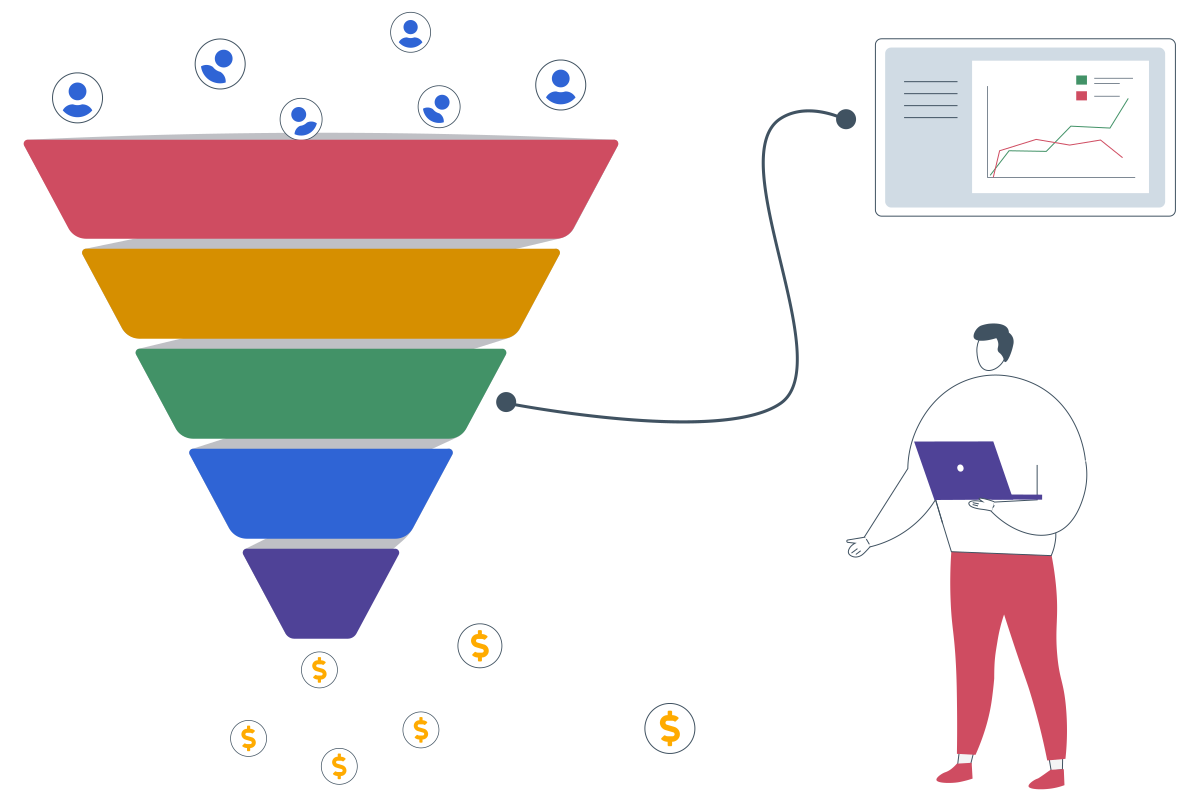
Every healthy sales pipeline tells a story long before revenue arrives. Some deals move fast. Some hesitate. Some disappear without warning. Without structured tracking, these movements remain invisible, and that invisibility costs revenue.
Each stage exists to reduce uncertainty. Each stage answers one critical question. Together, they form the backbone of effective sales pipeline management.
Prospecting
Nothing closes without entering first. Prospecting fills the future.
This stage focuses on identifying potential buyers who may be open to considering your solution. Sources vary. Website forms, outbound calls, referrals, campaign responses, inbound demos. Volume appears high here, but intent remains unclear.
This is where many pipelines get overloaded.
Without proper filtering, teams unknowingly create future pipeline stress. Strong pipeline management tools help capture source, track entry point, and measure which channels actually produce revenue, not just leads. Early visibility here determines pipeline quality later.
Qualification
Not every lead deserves sales time. Qualification protects focus. This stage exists to answer one uncomfortable but necessary question. Is this deal real, or just interest without outcome?
Frameworks like BANT help here:
- Budget confirms affordability
- Authority confirms decision power
- Need confirms urgency
- Timeline confirms immediacy
Without qualification, sales teams chase conversations instead of revenue. This stage directly impacts efficiency. Poor qualification creates pipeline inflation. Forecasts look strong on paper but collapse in reality.
Effective sales pipeline management forces discipline at this stage.
Discovery
Discovery changes everything. Surface interest becomes real opportunity here. This is where sales stops talking and starts understanding.
Conversations shift toward:
- Why now
- Why this solution
- What happens if nothing changes
- What risks the buyer fears
Emotional drivers surface here. Financial consequences become clearer. Trust begins forming.
Poor discovery creates weak proposals later. Strong discovery builds conviction. CRM powered sales pipeline tools record these insights, ensuring future conversations remain aligned.
Proposal
Commitment begins taking shape here. The proposal stage introduces structure. Pricing appears. The scope becomes clear. The buyer begins visualizing ownership.
But hesitation also increases here.
Questions around cost justification, internal approvals, and alternatives often surface. Many deals stall here because value was never properly established during discovery. Proposal acceptance rate often reflects discovery quality, not proposal quality.
Tracking proposal-stage movement within pipeline management tools reveals how convincing your positioning really is.
Negotiation
Momentum meets resistance here.
Buyers begin testing flexibility. Terms get challenged. Pricing gets questioned. Procurement teams may enter. This stage requires emotional intelligence as much as commercial logic.
Poor handling creates delay. Strong handling creates closure. This is also where many hidden sales Bottlenecks appear. Deals remain stuck here due to internal buyer friction, not product weakness.
Active sales pipeline management helps teams intervene early rather than wait passively.
Closed Won and Closed Lost
Reality arrives here. Closed Won confirms revenue creation. Closed Lost delivers something equally valuable. Insight. Most companies celebrate wins and ignore losses. That creates repeated mistakes.
Closed Lost analysis answers difficult questions:
- Was pricing the issue
- Was competition stronger
- Was timing wrong
- Was qualification weak
This stage improves future pipeline quality. This is where pipeline becomes a learning system, not just a tracking system.
Post Sale Transition
This stage did not exist clearly in older sales thinking. Now it defines retention success. Revenue does not end with closure. It begins there. Customers transition to onboarding, implementation, and support. Poor handoff creates buyer regret. Buyer regret creates churn.
Proper transition ensures:
- Customer expectations remain aligned
- Implementation happens smoothly
- Long term relationship strengthens
Modern pipeline management tools like Vtiger allow seamless movement from Sales to Customer Success without losing context.
The pipeline does not end at revenue. It evolves into retention.
How Sales Teams Benefit from Vtiger’s Sales Pipeline Tools
Most sales reps do not lose deals because they lack talent. They lose deals because they lack visibility. They forget to follow up. They misjudge urgency. They assume a deal is alive when it quietly died two weeks ago.
This is where sales pipeline tools start changing behavior. They remove blind spots in a practical sense
Unified customer visibility
Now let’s step slightly outside the pipeline itself. Sales decisions improve when context improves. Often, sales reps operate without knowing full customer history.
For example:
A customer may have raised a complaint with support last week. But sales may continue pushing a proposal without addressing that concern. This creates friction.
However, Vtiger solves this using One View. Inside each deal, reps can see:
- Marketing email engagement
- Support tickets
- Previous interactions
- Customer communication history
This unified visibility improves conversation quality. Pipeline progression becomes smoother because it reflects reality, not assumptions.
Visual clarity
Imagine opening your day without knowing which deal needs attention first. So you check emails. Then notes. Then messages. Then memory. By then, half your energy is already gone.
This is what unstructured selling feels like.
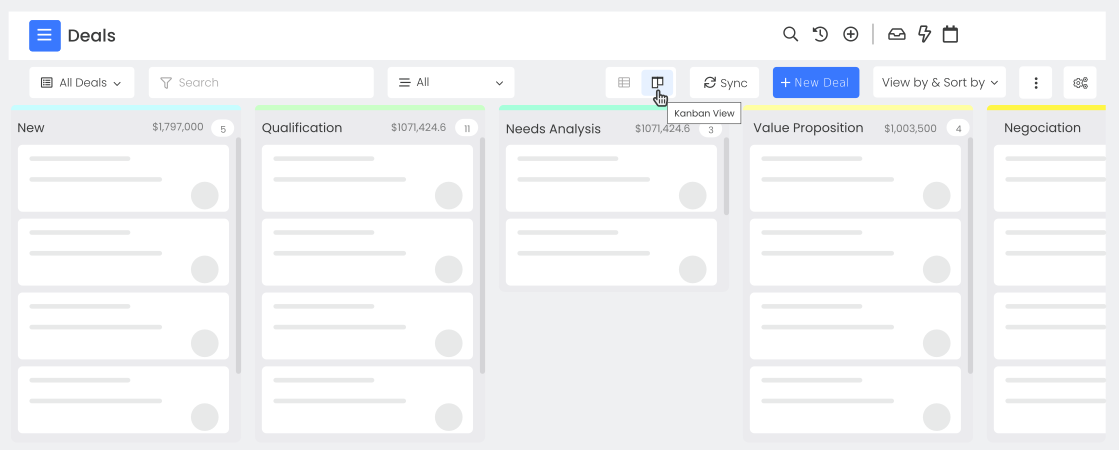
Vtiger’s drag and drop pipeline fixes this by putting your entire sales pipeline in front of you visually.
You see:
- Which deals just entered
- Which deals are close to closing
- Which deals have not moved
And this is the real benefit. It improves deal management not by forcing effort, but by making inaction visible. Sales reps naturally act when they see reality clearly.
Automated movement
Now think about how much time sales reps waste updating systems.
After sending a quote, they forget to update the CRM. After receiving a reply, they forget to move the deal. The pipeline slowly becomes outdated. And once trust in data breaks, nobody relies on it. This is where automation becomes less of a feature and more of a correction mechanism.
Inside Vtiger, deals move when prospect behavior is mapped with each step.
When:
- A quote gets sent
- A customer opens an email
- A meeting gets completed
The system responds. The sales pipeline management process remains viable without relying entirely on human discipline. This keeps forecasts honest.
AI driven deal insights
Now let’s talk about something sales reps often struggle to detect early.
Deal risk.
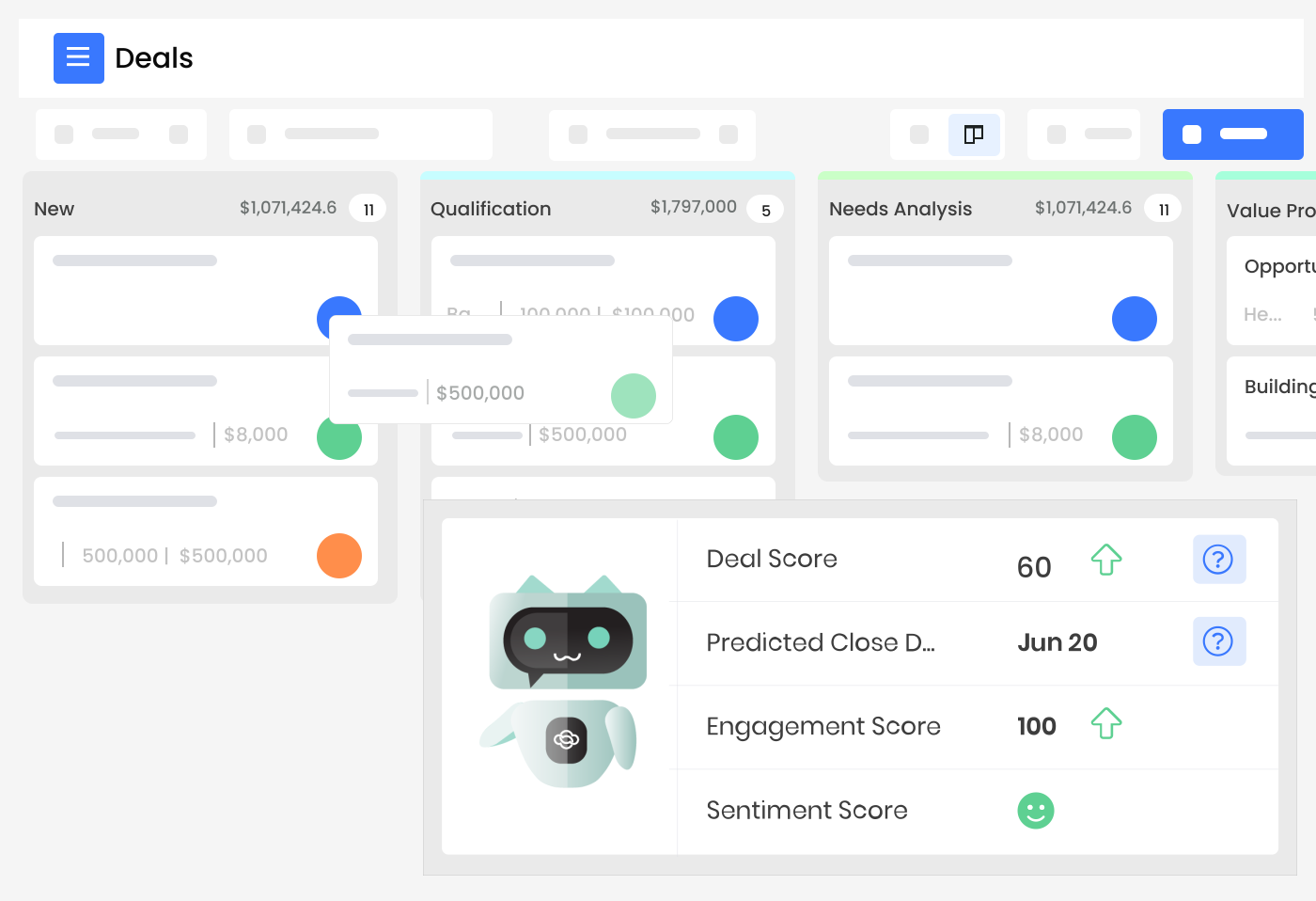
Sometimes a deal looks active but quietly loses momentum. Customer replies slow down. Meeting frequency drops. Engagement weakens. These signals are easy to miss manually. Vtiger Calculus AI analyzes behavioral signals continuously. Using AI-based deal scoring, it evaluates:
- Email engagement levels
- Response timing
- Interaction frequency
- Deal progression speed
Based on this, it identifies:
- High probability deals
- At risk deals
- Deals needing immediate action
This helps sales reps prioritize intelligently, not emotionally. Time goes toward deals most likely to convert.
Mobile pipeline access
Finally, let’s consider mobility. Sales work does not happen only at desks. It happens during travel. During meetings. Immediately after conversations.
Delaying updates creates inaccuracies. Vtiger’s mobile CRM allows reps to:
- Update deal stages instantly
- Add notes immediately after meetings
- Track pipeline progress anywhere
This keeps the sales pipeline management system up to date .
Accuracy improves. Forecasting improves. Planning improves.
Why Choose Vtiger CRM for Sales Pipeline Management in 2026
CRM decisions shape long term efficiency. Vtiger positions itself differently by focusing on intelligence, flexibility, and value.
AI guidance
Calculus AI recommends next best actions. Follow ups become smarter. Timing improves. Opportunity value increases.
Custom pipeline design
Different businesses sell differently. Vtiger allows multiple pipelines for new sales, renewals, and upsells without complex development.
Better cost value
Enterprise level features remain accessible. Businesses can maximize your CRM ROI without enterprise level costs.
Data protection
Global compliance standards like GDPR and CCPA protect sensitive customer information inside analytics layers.
Seamless integration
Daily tools like Gmail, Office 365, Slack, and WhatsApp connect naturally. Sales workflows remain uninterrupted.
Modern sales pipeline management becomes easier with the right system.
Get Started with Sales Pipeline Management Using Vtiger CRM
Starting sales pipeline management in Vtiger requires clear setup and disciplined usage. The goal is to ensure every deal is tracked properly, every stage reflects real progress, and the team can rely on accurate pipeline data for decisions and forecasting.
Audit your current process
Every business already follows certain steps to convert leads into customers. These steps may include enquiry, qualification, proposal, and negotiation. These real world steps should be documented first. This helps teams understand how their current sales pipeline works and where deals slow down or drop off. This information is necessary before configuring pipeline stages inside the CRM.
Customize your pipeline stages
Once the process is defined, the same stages should be created inside Vtiger. Each stage should represent a specific point in the buying journey. Probability percentages should also be assigned to each stage. These percentages help managers Forecast Sales Targets based on how likely deals are to close from each stage. This improves forecast accuracy and planning.
Import and cleanse data
Existing leads and deals must be added into the system. This includes removing duplicate records, correcting incomplete entries, and updating outdated information. Clean data improves pipeline visibility and ensures pipeline management tools provide reliable insights. Poor data quality leads to incorrect reporting and missed opportunities.
Set up automation rules
Automation helps maintain pipeline accuracy without depending entirely on manual updates. Vtiger allows workflows that move deals when actions happen, such as sending a quote or receiving a reply. Alerts can also notify sales managers when deals remain inactive. These automation features improve sales pipeline management by keeping information current.
Train the sales team
Sales teams must use the system consistently. Reps should update deal stages, add notes after meetings, and review their pipeline regularly. This ensures the sales management system reflects actual progress. Consistent usage also improves reporting accuracy and helps managers support the team effectively.
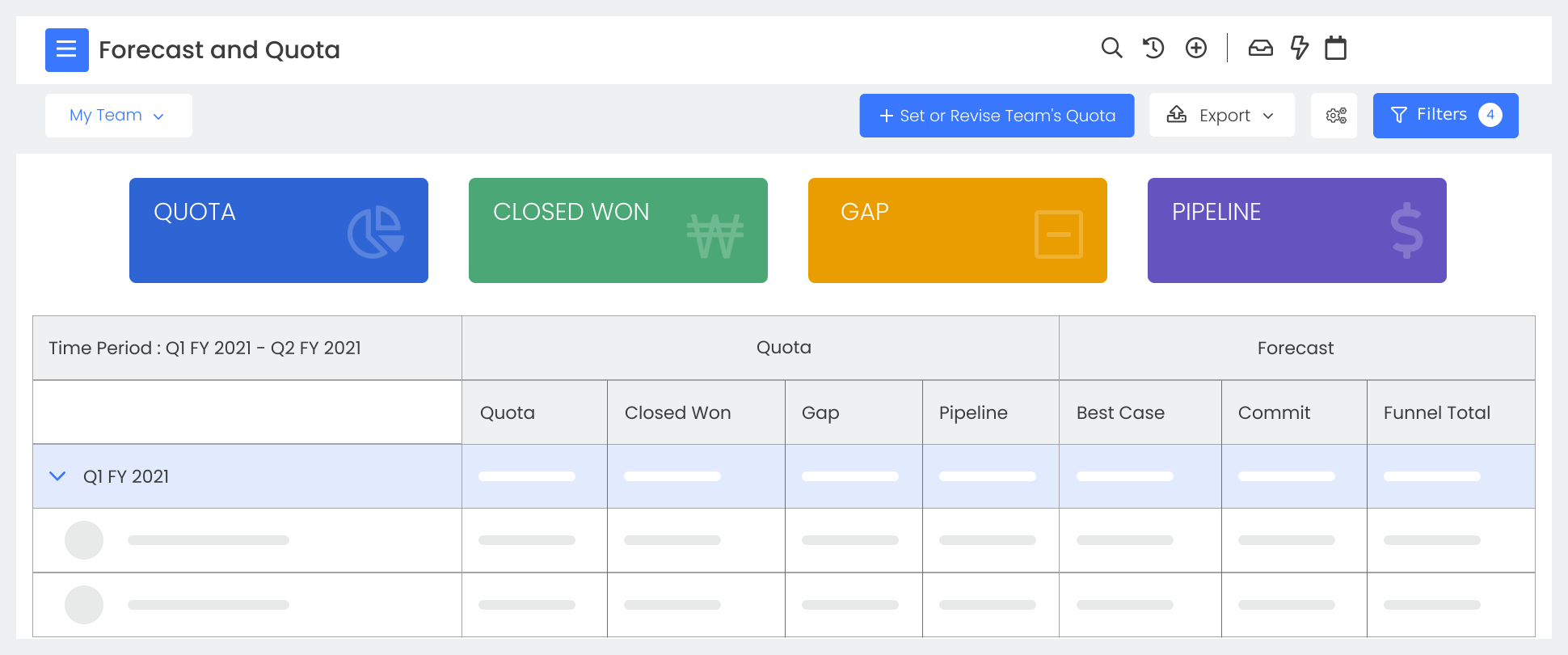
Review pipeline dashboards
Vtiger provides dashboards showing deal value, expected revenue, and pipeline progress. Managers can review these dashboards regularly to identify risks and track performance. This allows businesses to improve conversion rates and use their pipeline management system effectively for revenue planning.