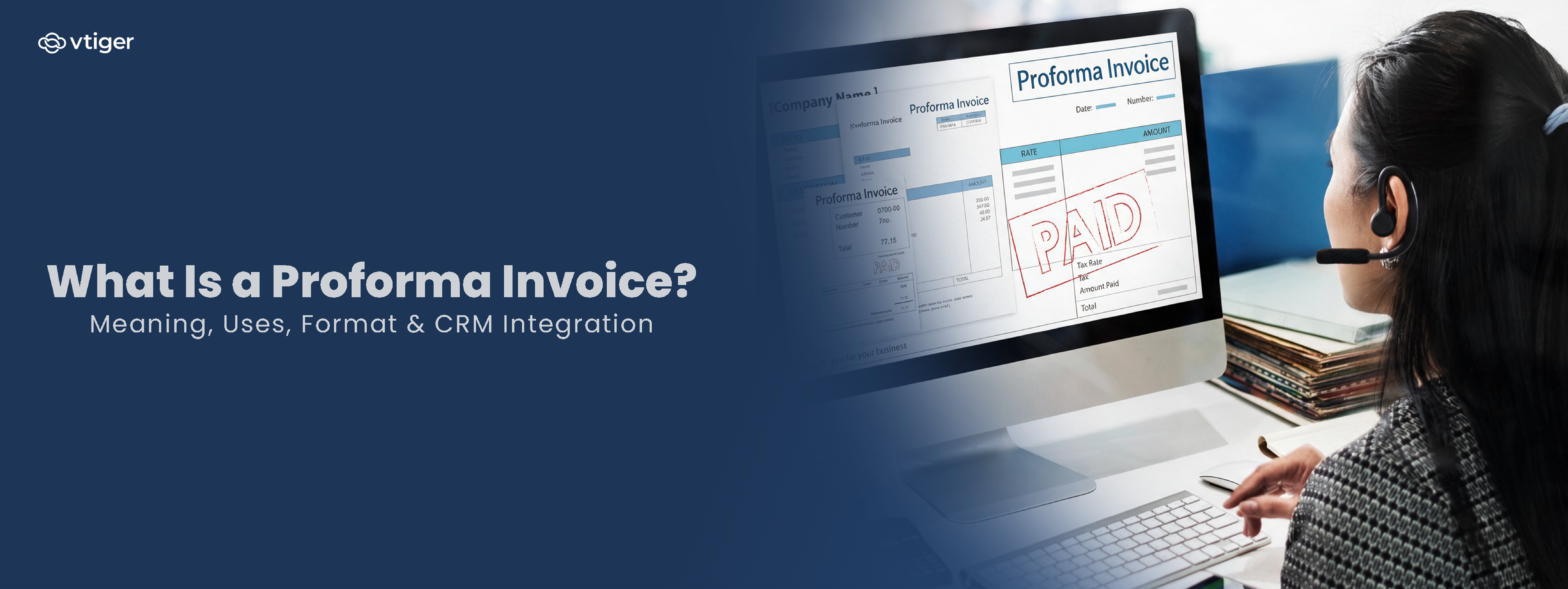
A proforma invoice is a preliminary document that outlines the expected products, services, prices, quantities, and terms of a transaction before the sale is completed. It is generally not a tax invoice or a payment request. Businesses use proforma invoices to confirm order details, support approvals, prepare for international shipments, and provide the information required to create the final commercial invoice.
A customer has agreed to buy 500 units. The price is settled, and the delivery terms are known, but the sale has not yet reached the invoicing stage.
What does the buyer use to get the order approved? What does the seller give a freight forwarder or customs broker when a commercial invoice does not yet exist?
A proforma invoice bridges that gap. While it looks much like an ordinary invoice—complete with buyer and seller details, product descriptions, quantities, pricing, payment terms, and delivery info—the key difference lies in what it represents. A proforma invoice outlines a proposed transaction rather than serving as the final bill or accounting record.
This guide explains what a proforma invoice is, what it contains, how it differs from a quote and commercial invoice, when businesses use it, and how CRM systems can make the process easier to manage.
What Is a Proforma Invoice?
A proforma invoice is a preliminary commercial document issued before a sale is completed. It sets out what the seller expects to supply and the terms on which the transaction is proposed.
Depending on the transaction, it generally include:
- Products or services
- Quantities
- Unit prices
- Discounts
- Estimated taxes or charges
- Currency
- Payment terms
- Delivery details
- Shipping information
- Buyer and seller details
The document gives the buyer something more concrete than a conversation or email exchange. Procurement, finance, logistics, a bank, or a customs broker can review it before the transaction reaches its final stage.
What Does “Proforma” Mean?
“Proforma” derives from Latin and broadly means “for the sake of form.” In commercial use, the term reflects the document’s appearance and purpose: it resembles an invoice but is prepared for a transaction that has not yet reached final invoicing.
For this reason, the document heading is critical. Clear labeling ensures a proforma invoice is never confused with a final sales or tax invoice.
Is a Proforma Invoice Legally Binding?
Issuing a proforma invoice does not, by itself, determine whether a legally binding contract exists.
The underlying agreement may already create contractual obligations through an accepted quotation, purchase order, signed contract, or another form of acceptance. Conversely, a proforma may simply describe proposed terms that the parties have not yet accepted.
The safer distinction is this: a proforma invoice records proposed transaction terms; it does not automatically create a contract in its own right.
What Does a Proforma Invoice Include?
The information present on a Proforma Invoice should reflect the transaction and any tax, shipping, financing, or customs requirements that apply.
| Information | What to include |
| Seller details | Business name, address, contact details, registration details where relevant |
| Buyer details | Customer name, billing or delivery address, contact information |
| Document details | Proforma invoice number, issue date, validity date |
| Goods or services | Description, quantity, unit price, discounts, estimated total |
| Payment details | Currency, payment terms, bank details where relevant |
| Delivery details | Delivery date, destination, shipping method, trade terms |
| Transaction references | Quote number, purchase order, customer reference, or deal reference |
| International details | Country of origin, package information, or other customs information where required |
A validity date is useful when prices, exchange rates, availability, or delivery costs can change. It tells the buyer how long the stated commercial terms are expected to remain open.
The document also needs to remain accessible after it has been sent. For businesses handling large volumes of proposals, quotes, contracts, and invoices, sales document management can help keep those records organized rather than scattered across inboxes and local folders.
For international transactions, the seller should also check whether the destination country’s customs authority requires additional information.
Proforma Invoice vs Quote vs Commercial Invoice
The three documents may contain similar information, but they appear at different points in the sales process.
| Quote | Proforma Invoice | Commercial Invoice | |
| Primary purpose | Propose pricing and terms | Set out the proposed transaction in detail | Bill for the transaction |
| Typical timing | During negotiation | Before final invoicing or shipment | When the sale reaches the invoicing stage |
| Requests payment | No | Generally no | Yes |
| Records completed sale | No | No | Yes |
| Tax document | No | Generally no | May qualify where applicable requirements are met |
| Customs role | Limited | Used in relevant circumstances | Commonly required for international shipments |
A quote presents the initial offer, a proforma confirms the proposed transaction, and a commercial invoice completes the billing stage.
Managing these three steps often means keeping track of complex deals with multiple products, custom quantities, and negotiated discounts.
Vtiger’s opportunity line items streamline this process by keeping all transaction details attached to the opportunity record—allowing you to carry accurate data seamlessly into subsequent quotes, sales orders, and final invoices.
When Should You Use a Proforma Invoice?
A proforma invoice is most useful when the transaction has progressed beyond a basic quotation but has not yet reached final invoicing.
Confirming the Order Before Fulfillment
A seller can send a proforma before manufacturing, packing, or dispatch. The buyer gets one last opportunity to check quantities, specifications, prices, and delivery details.
Catching an incorrect quantity on a document is considerably easier than correcting the same mistake after goods have shipped.
Supporting Internal Approvals
Large organizations often involve multiple stakeholders in purchasing decisions. Procurement typically requires finance, department heads, or other key approvers to review the proposed transaction before issuing a purchase order.
A detailed proforma gives all stakeholders a single, clear document to review.
Preparing for International Trade
Export transactions can involve several parties before goods leave the seller’s premises. Buyers rely on clear documentation for import licenses and trade financing, while logistics and customs teams use transaction details to prepare shipments.
A proforma can provide preliminary transaction details while the final commercial invoice remains pending.
Requesting Advance Payment
A supplier may ask a customer to pay before delivering goods or starting work. A proforma invoice can communicate the amount and proposed payment terms.
There is an important caveat, though: the tax consequences of receiving advance payment are separate from the proforma document’s status.
Preparing the Final Invoice
Once the transaction reaches the appropriate stage, most of the information on the proforma can carry over to the final commercial invoice.
That does not make the two documents interchangeable. The final invoice still needs its own appropriate reference and must meet the invoicing, tax, and accounting requirements that apply to the transaction.
Tax and Customs Considerations
A proforma invoice is often described as “not an invoice,” which is useful as a basic distinction but can become misleading when money or international trade enters the picture.
Receiving Payment Can Change the Tax Position
The document itself does not necessarily create a tax liability. However, the underlying transaction can trigger tax obligations regardless of what the document is called.
| For example, HM Revenue & Customs explains that receiving payment in advance can create an actual VAT tax point before the basic tax point in certain circumstances. (HMRC VAT time-of-supply guidance) |
So a business should not assume that labeling a document “proforma” settles the tax treatment. If the customer has already paid, the applicable tax rules need to be considered and the appropriate tax invoice issued under local regulations.
Customs Treatment Depends on the Country
Proforma invoices can also appear in customs processes, but no single global rule governs their use.
| In the United States, for example, customs regulations specifically address proforma invoices when the required commercial invoice is not available. |
US regulations also permit entry against a proforma invoice in defined circumstances, subject to conditions including a bond and later submission of the required invoice.
For exporters, the takeaway is practical: check the destination country’s requirements before assuming a proforma will be sufficient.
How to Create a Proforma Invoice
An effective proforma invoice is less about visual design and more about ensuring complete, precise transaction details.
- Label it clearly: Incorporate “Proforma Invoice” prominently on the document so it cannot be mistaken for a final invoice.
- Identify the parties: Include the seller and buyer’s names, addresses, and relevant contact or registration information.
- Assign a distinct reference: Use a numbering convention that separates proforma documents from final sales invoices.
- Describe the proposed supply: Include products or services, quantities, unit prices, discounts, and estimated total.
- State the commercial terms: Add currency, payment terms, delivery information, validity period, and applicable trade terms.
- Add transaction-specific information: Include purchase order numbers, shipping details, country of origin, or other information required for the transaction.
- Review before issuing: Compare the document against the underlying quotation, order, or deal record.
- Version changes properly: If the customer changes the order, retain the earlier version and issue a revised proforma rather than overwriting the original.
Issue the final commercial or tax invoice separately when the transaction reaches the appropriate stage.
For teams that need consistent formatting across quotes, invoices, and other sales documents, Vtiger’s Print Templates can create customized PDF documents from CRM records.
How CRM Helps Manage Proforma Invoices
The administrative problem with proforma invoices is rarely the document itself. It is the information that has to reach the document accurately.
Customer data resides in a CRM. Product and pricing information may be attached to an opportunity. Delivery terms may have been agreed in an email. Someone then opens a spreadsheet or template and starts copying everything across.
That is where errors creep in.
Build the Document From Existing Data
A CRM can hold customer details, products, quantities, negotiated prices, discounts, and transaction references. Using those records as the starting point avoids retyping information into a separate document.
The benefit becomes more obvious as a deal gets more complicated. If the customer changes a quantity or discount, the sales record provides a clearer source for the revised document than a collection of email attachments.
Keep the Document With the Transaction
A proforma invoice should remain connected to the deal record that generated it.
Suppose the buyer asks for 50 more units two days after receiving the document. If the original proforma is stored as an email attachment, someone has to determine which price and quantity were actually agreed. When the document and deal record are connected, the change has a clearer place in the transaction history.
That context matters when a deal moves from sales to operations or finance. The people handling the next step can see what was proposed without reconstructing the transaction from separate systems.
Automate Follow-Up
Not every proforma produces an immediate response. Some wait for approval; others expire because the buyer’s requirements change.
A CRM can create reminders around validity dates, assign follow-up tasks when a document has been outstanding for too long, or trigger actions when an opportunity changes stage.
For example, Vtiger’s workflow capabilities can automate sales-related tasks around stages such as closing a deal and handing information to billing, reducing the need to coordinate every follow-up manually.
Preserve the Path to the Final Invoice
The proforma should be one step in a transaction, not a dead-end document.
Once the customer confirms the order, the relevant information can move into the final invoicing process. Keeping the earlier document associated with the transaction provides useful context if someone later needs to understand how the order changed between quotation, approval, and final billing.
How Vtiger Supports Proforma Invoicing
Vtiger connects the customer record, opportunity, product information, documents, and sales activity within the CRM. This gives teams a foundation for managing the proforma invoice process without treating the CRM as the accounting system.
Start With the Opportunity
A proforma should not require the sales team to start from an empty template.
Customer information and the opportunity’s commercial details already exist in the CRM. Product and service line items can provide the quantities, prices, and discounts that eventually appear in customer-facing documents.
This reduces the gap between what the salesperson agreed with the customer and what appears on the document.
Keep Documents Accessible
A revised proforma should not erase the original’s history. Teams need to know which version was sent, what changed, and which document ultimately led to the order.
Keeping sales documents associated with the relevant customer or deal gives that history a natural home and makes later retrieval easier.
Connect Follow-Up to the Sales Cycle
Once a proforma has been sent, the next event might be an approval, a requested revision, an advance payment, or an order confirmation.
You can connect those events to tasks and workflow actions instead of leaving them to individual memory. This becomes even more valuable when sales teams handle many open opportunities at once.
Connect the Confirmed Transaction to Accounting
The CRM and accounting system have different responsibilities, but the information between them should remain consistent.
Vtiger supports integrations that move relevant customer, product, and invoice information between systems. Its accounting integrations can reduce duplicate entry once the transaction reaches the financial workflow.
| For example, Vtiger’s invoice accounting integration can connect invoice information between CRM and accounting workflows, reducing the need for sales and finance teams to manually exchange the same transaction data. |
Frequently Asked Questions
What is a proforma invoice?
A proforma invoice is a preliminary document that describes a proposed transaction. It usually includes products or services, quantities, prices, and commercial terms but is generally not the final invoice used to bill the customer.
Is a proforma invoice the same as an invoice?
No. A proforma invoice is prepared before the transaction reaches the final invoicing stage. A commercial or tax invoice formally bills the customer and, where applicable, records the completed transaction and tax.
Is a proforma invoice legally binding?
Not automatically. Whether the parties are legally bound depends on the underlying agreement, acceptance, purchase order, contract, and applicable law rather than simply the existence of a proforma invoice.
Can a proforma invoice be used to request payment?
Businesses may use one when requesting advance payment, but receiving payment can create separate tax or accounting obligations. A proforma should not simply be treated as a substitute for the required tax invoice.
What should a proforma invoice contain?
It should normally include seller and buyer details, a document reference, issue and validity dates, descriptions of the proposed goods or services, quantities, prices, currency, payment terms, delivery information, and any transaction-specific shipping or customs information.
Does a proforma invoice go into accounting?
Generally, a proforma invoice is not recorded as the final sales transaction. Issue and record the appropriate commercial or tax invoice when the transaction reaches the relevant stage. Advance payments may require separate accounting treatment.
Can a proforma invoice be used for customs?
It can be used in certain customs situations, but requirements vary by country and transaction. Exporters should check the rules applicable to the destination and shipment.
How can CRM help with proforma invoices?
A CRM can use existing customer and opportunity data to prepare transaction documents, keep document versions connected to the deal, automate follow-up, and pass confirmed transaction information to connected financial systems.