Search Vtiger.com


CRM for Real Estate Companies, Realtors and Agents

Vtiger CRM is a single place to manage property inquiries, interact with buyers, manage property listings, schedule site visits, and nurture leads via emails and SMS campaigns.

Get started with Vtiger
vtiger for realtors

Powering 400,000+ Businesses globally

Nurture your leads with Email & SMS Campaigns

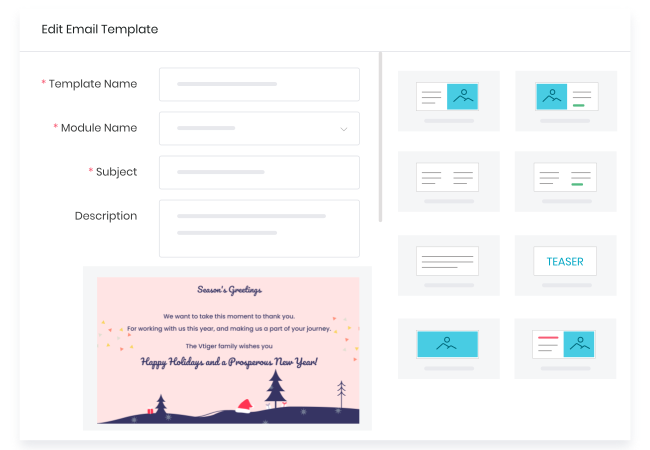
Nurture leads by giving right information at the right time using Email and SMS campaigns. Analyze campaign performance, open rates, clicks, bounces and unsubscribes to tweak your messaging and targeting.

Understand what’s working and what’s not

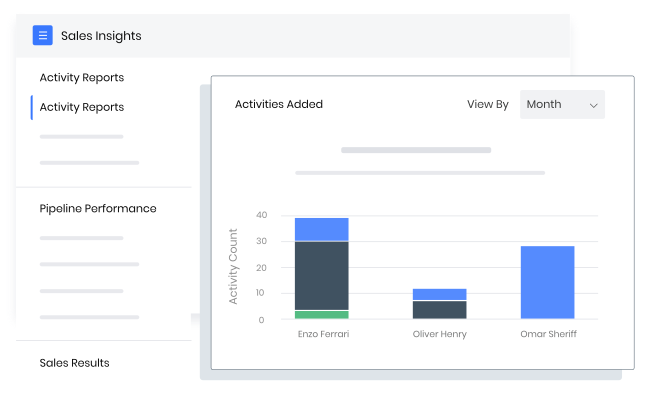
Gain deeper insights into your real estate sales process. Sales insights and custom reports show you where agents spend time and what's working. Additionally, scheduled reports to get them delivered right into your email inbox.

Sign up for the Vtiger CRM which works for your real estate business

No credit card required. Cancel anytime.

What is Real estate CRM?

A real estate CRM software is designed to help realtors provide personalized service to clients from one unified platform. It is a one-stop solution for real-estate companies to manage leads, track inquiries, schedule appointments, and handle contracts.

Real estate agents need to be tenacious in the pursuit to convert leads to long-term customers. A Customer Relationship Management (CRM) tool is ideal for brokers or contractors as it allows them to automate workflows and save time on repetitive tasks. It provides a bird’s eye view of the entire sales process, deals in the pipeline, and inventory, all in a centralized database.

Why is CRM software vital for Realtors and Real estate businesses?

Centralized Information: Collects information from various channels such as web forms, emails, calls, and social media to store it in a centralized database with easy access.

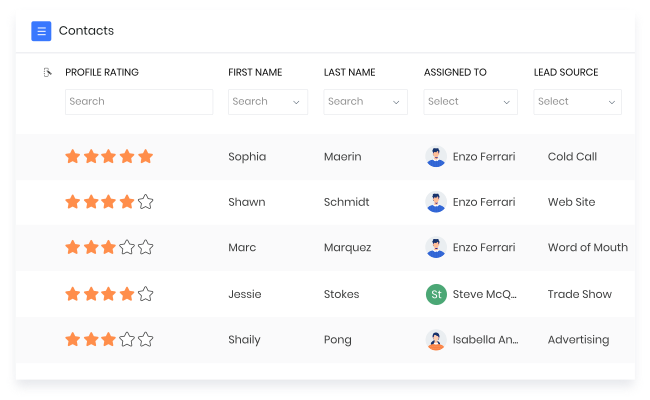
Smart Lead Management: Agents and brokers can identify the most valuable leads and prioritize them to effectively close deals.

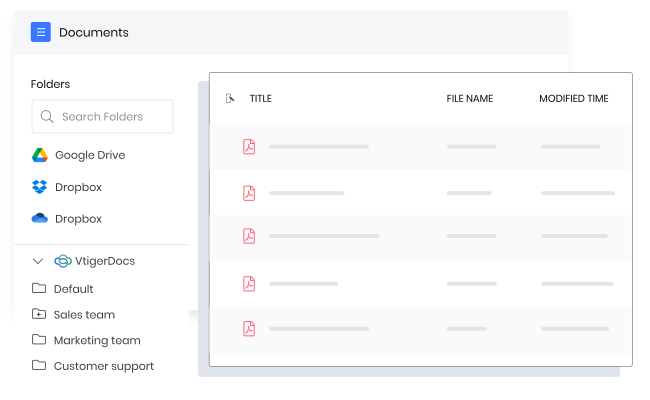
Secures Transactions: Agents can upload contracts and manage monetary transactions. It stores all vital documents, brochures, and deal-related information securely.

Personalized Marketing Campaigns: Real-estate businesses can conduct powerful email drip and social media campaigns with CRM tools to target the right audiences.

24*7 Support and Mobility: Agents have customer information right at their fingertips at all times. They can respond to inquiries and provide service at any time, anywhere.

Seamless Integrations: Integrate with typical business applications. This saves time, facilitates quick data transfer, and helps in team collaboration.

Quick Query Resolution: Realtors and agents can remain available for clients round the clock. This promotes quick query resolution and boosts customer satisfaction.

How a Real Estate CRM Improves Lead Conversion & Sales

How a Real Estate CRM Improves Lead Conversion & Sales

In real estate, deals rarely fail because buyers disappear suddenly. Momentum usually breaks when conversations, site visits, and follow-ups lose continuity across time. A real estate CRM influences conversion by keeping these moments connected, even when weeks pass between interactions.

Conversion Improves When Context Survives Delays

Property buyers often pause after an enquiry, return after a site visit, and respond again only when circumstances align. When past conversations, preferences, visit notes, and objections remain visible, agents resume discussions with accuracy instead of repeating earlier steps. This continuity reduces frustration and keeps buyers engaged through longer decision cycles.

Follow-Ups Reflect Buyer Behavior

Follow-ups work best when they respond to what the buyer last did, not when they follow a fixed calendar. A CRM preserves signals such as visit outcomes, document views, and unanswered messages, which allows agents to adjust timing and messaging based on real behavior rather than assumptions.

Real Estate CRM vs Generic CRM: What’s the Difference?

The difference between real estate CRMs and generic CRMs becomes apparent when everyday work starts bending the system rather than the system supporting the work. Property sales introduce patterns that generic deal models struggle to represent accurately.

Buyers and Properties Intersect Continuously

In real estate, the relationship between buyers and properties is never linear. Buyers compare options in parallel, revisit earlier listings after new visits, and often keep alternatives alive until late-stage decisions. At the same time, properties move through multiple buyers, each with different urgency, budgets, and constraints. When systems collapse this into a single buyer–deal path, engagement signals blur, because activity tied to one property is mistaken as overall intent, and genuine comparison behavior is misread as indecision.

Site Visits Shift Intent More Than Conversations

A site visit introduces physical context that conversations cannot substitute. Layout, surroundings, access, and on-site experience often confirm or reject weeks of verbal interest within minutes. When visits are treated as simple calendar entries, the shift in buyer thinking remains unrecorded. Without capturing visit outcomes, objections raised on-site, or follow-up questions triggered by the visit, subsequent conversations lose alignment with how the buyer’s evaluation actually changed.

Documents Indicate Internal Evaluation

Document requests usually reflect activity happening outside the conversation. When buyers ask for brochures, approvals, or legal details, it often means discussions are taking place with family members, partners, or advisors. Treating documents as static attachments ignores this signal. Tracking which documents were shared, viewed, or revisited adds context about seriousness, hesitation, or validation needs, which helps explain silence or delays that would otherwise appear unresponsive.

Benefits of Using a Real Estate CRM Software

Information Does Not Need to Be Reassembled

In real estate, every interaction depends on what came before it. Without a central system, agents repeatedly reconstruct context by checking messages, recalling visits, or asking colleagues for updates. When enquiry details, visit outcomes, objections, preferences, and past communication remain connected, agents enter each interaction already aligned with the buyer’s current position. This reduces repeated questions, shortens conversations, and prevents frustration that often builds when buyers feel unheard.

Actions Remain Visible Over Time

Follow-ups, site visits, document exchanges, and callbacks often stretch across long periods, especially when buyers pause decision-making. When these actions remain visible even during inactivity, stalled deals are recognized as delayed rather than forgotten. This visibility prevents silent drop-off, where opportunities disappear simply because no one notices that nothing has happened.

Management Visibility Improves Without Disruption

Managers typically lose visibility when updates rely on verbal reporting or ad hoc reviews. A CRM allows activity, delays, and engagement patterns to be reviewed directly, without pulling agents away from live work. Guidance becomes timely and specific because it is based on observed behavior rather than after-the-fact explanations.

Continuity Survives Team Changes

Real estate teams change frequently due to rotations, absences, or territory reassignments . Without recorded context, conversations reset when agents change. When history is preserved in a CRM, new agents continue interactions with accuracy, maintaining buyer confidence and preventing loss caused by repetition or inconsistency.

How to Choose the Right Real Estate CRM for Your Business

Selecting a real estate CRM requires examining how well it performs under routine strain rather than ideal scenarios. Systems that appear adequate during demonstrations often fail when exposed to real inquiry volume, long pauses, and field-based work.

Inquiry Entry Determines Downstream Accuracy

The point where an enquiry enters the system shapes everything that follows. Calls, website forms, campaigns, and walk-ins must enter a single flow automatically. When leads are captured inconsistently or manually, visibility breaks early, follow-ups slow down, and reporting becomes unreliable. These issues compound over time and are difficult to correct later.

Field Activity Should Not Delay Updates

Most meaningful sales activity happens away from desks. Site visits, on-location discussions, and document sharing often occur back-to-back. When systems require updates to be done later, memory fills the gaps, and accuracy suffers. A CRM that supports immediate updates ensures that recorded information reflects what actually happened, not what is remembered hours later.

Inactivity Should Preserve Context

Periods of silence are common in property decisions. Buyers pause while discussing internally or waiting for approvals. The system must preserve full context during inactivity so re-engagement reflects prior progress. Without this, follow-ups feel cold and disconnected, even when interest still exists.

Reporting Should Explain Patterns, Not Just Results

Knowing which deals closed is not enough to improve operations. Reporting must show how long deals paused, where momentum slowed, and how engagement evolved over time. This pattern-level visibility allows teams to adjust behavior rather than react only to outcomes.

Why Vtiger CRM Is a Smart Choice for Real Estate Teams

Vtiger aligns with real estate operations by supporting how work unfolds across time, locations, and channels, rather than forcing it into rigid structures.

Inquiries Remain Centralized

Property enquiries arrive from multiple sources throughout the day. When they remain centralized, response time improves and ownership is clear. Early fragmentation is avoided, which protects downstream coordination and follow-up quality.

Visits and Documents Stay Linked

Site visits and documents often determine whether interest strengthens or weakens. When visits, brochures, approvals, and agreements stay linked to the correct buyer and property, their impact on intent remains visible. This prevents misinterpretation of silence or hesitation.

Collaboration Occurs Within Context

Real estate selling is rarely solo work. Internal notes, updates, and clarifications need to stay tied to the opportunity itself. Contextual collaboration prevents loss of understanding when work moves between people or pauses temporarily.

Reporting Reflects Actual Activity

When effort, engagement, and outcomes are visible together, teams can see how work translates into results. This removes guesswork and supports better planning without relying on assumptions.


How a Real Estate CRM Improves Lead Conversion & Sales

How a Real Estate CRM Improves Lead Conversion & Sales

How a Real Estate CRM Improves Lead Conversion & Sales

In real estate, deals rarely fail because buyers disappear suddenly. Momentum usually breaks when conversations, site visits, and follow-ups lose continuity across time. A real estate CRM influences conversion by keeping these moments connected, even when weeks pass between interactions.

Conversion Improves When Context Survives Delays

Property buyers often pause after an enquiry, return after a site visit, and respond again only when circumstances align. When past conversations, preferences, visit notes, and objections remain visible, agents resume discussions with accuracy instead of repeating earlier steps. This continuity reduces frustration and keeps buyers engaged through longer decision cycles.

Follow-Ups Reflect Buyer Behavior

Follow-ups work best when they respond to what the buyer last did, not when they follow a fixed calendar. A CRM preserves signals such as visit outcomes, document views, and unanswered messages, which allows agents to adjust timing and messaging based on real behavior rather than assumptions.

Real Estate CRM vs Generic CRM: What’s the Difference?

The difference between real estate CRMs and generic CRMs becomes apparent when everyday work starts bending the system rather than the system supporting the work. Property sales introduce patterns that generic deal models struggle to represent accurately.

Buyers and Properties Intersect Continuously

In real estate, the relationship between buyers and properties is never linear. Buyers compare options in parallel, revisit earlier listings after new visits, and often keep alternatives alive until late-stage decisions. At the same time, properties move through multiple buyers, each with different urgency, budgets, and constraints. When systems collapse this into a single buyer–deal path, engagement signals blur, because activity tied to one property is mistaken as overall intent, and genuine comparison behavior is misread as indecision.

Site Visits Shift Intent More Than Conversations

A site visit introduces physical context that conversations cannot substitute. Layout, surroundings, access, and on-site experience often confirm or reject weeks of verbal interest within minutes. When visits are treated as simple calendar entries, the shift in buyer thinking remains unrecorded. Without capturing visit outcomes, objections raised on-site, or follow-up questions triggered by the visit, subsequent conversations lose alignment with how the buyer’s evaluation actually changed.

Documents Indicate Internal Evaluation

Document requests usually reflect activity happening outside the conversation. When buyers ask for brochures, approvals, or legal details, it often means discussions are taking place with family members, partners, or advisors. Treating documents as static attachments ignores this signal. Tracking which documents were shared, viewed, or revisited adds context about seriousness, hesitation, or validation needs, which helps explain silence or delays that would otherwise appear unresponsive.

Benefits of Using a Real Estate CRM Software

Information Does Not Need to Be Reassembled

In real estate, every interaction depends on what came before it. Without a central system, agents repeatedly reconstruct context by checking messages, recalling visits, or asking colleagues for updates. When enquiry details, visit outcomes, objections, preferences, and past communication remain connected, agents enter each interaction already aligned with the buyer’s current position. This reduces repeated questions, shortens conversations, and prevents frustration that often builds when buyers feel unheard.

Actions Remain Visible Over Time

Follow-ups, site visits, document exchanges, and callbacks often stretch across long periods, especially when buyers pause decision-making. When these actions remain visible even during inactivity, stalled deals are recognized as delayed rather than forgotten. This visibility prevents silent drop-off, where opportunities disappear simply because no one notices that nothing has happened.

Management Visibility Improves Without Disruption

Managers typically lose visibility when updates rely on verbal reporting or ad hoc reviews. A CRM allows activity, delays, and engagement patterns to be reviewed directly, without pulling agents away from live work. Guidance becomes timely and specific because it is based on observed behavior rather than after-the-fact explanations.

Continuity Survives Team Changes

Real estate teams change frequently due to rotations, absences, or territory reassignments . Without recorded context, conversations reset when agents change. When history is preserved in a CRM, new agents continue interactions with accuracy, maintaining buyer confidence and preventing loss caused by repetition or inconsistency.

How to Choose the Right Real Estate CRM for Your Business

Selecting a real estate CRM requires examining how well it performs under routine strain rather than ideal scenarios. Systems that appear adequate during demonstrations often fail when exposed to real inquiry volume, long pauses, and field-based work.

Inquiry Entry Determines Downstream Accuracy

The point where an enquiry enters the system shapes everything that follows. Calls, website forms, campaigns, and walk-ins must enter a single flow automatically. When leads are captured inconsistently or manually, visibility breaks early, follow-ups slow down, and reporting becomes unreliable. These issues compound over time and are difficult to correct later.

Field Activity Should Not Delay Updates

Most meaningful sales activity happens away from desks. Site visits, on-location discussions, and document sharing often occur back-to-back. When systems require updates to be done later, memory fills the gaps, and accuracy suffers. A CRM that supports immediate updates ensures that recorded information reflects what actually happened, not what is remembered hours later.

Inactivity Should Preserve Context

Periods of silence are common in property decisions. Buyers pause while discussing internally or waiting for approvals. The system must preserve full context during inactivity so re-engagement reflects prior progress. Without this, follow-ups feel cold and disconnected, even when interest still exists.

Reporting Should Explain Patterns, Not Just Results

Knowing which deals closed is not enough to improve operations. Reporting must show how long deals paused, where momentum slowed, and how engagement evolved over time. This pattern-level visibility allows teams to adjust behavior rather than react only to outcomes.

Why Vtiger CRM Is a Smart Choice for Real Estate Teams

Vtiger aligns with real estate operations by supporting how work unfolds across time, locations, and channels, rather than forcing it into rigid structures.

Inquiries Remain Centralized

Property enquiries arrive from multiple sources throughout the day. When they remain centralized, response time improves and ownership is clear. Early fragmentation is avoided, which protects downstream coordination and follow-up quality.

Visits and Documents Stay Linked

Site visits and documents often determine whether interest strengthens or weakens. When visits, brochures, approvals, and agreements stay linked to the correct buyer and property, their impact on intent remains visible. This prevents misinterpretation of silence or hesitation.

Collaboration Occurs Within Context

Real estate selling is rarely solo work. Internal notes, updates, and clarifications need to stay tied to the opportunity itself. Contextual collaboration prevents loss of understanding when work moves between people or pauses temporarily.

Reporting Reflects Actual Activity

When effort, engagement, and outcomes are visible together, teams can see how work translates into results. This removes guesswork and supports better planning without relying on assumptions.

FAQs

A CRM helps real estate companies capture leads from emails, phone calls, and social media. It organizes and tracks inquiries, allowing agents to follow up on high-priority leads quickly and efficiently.

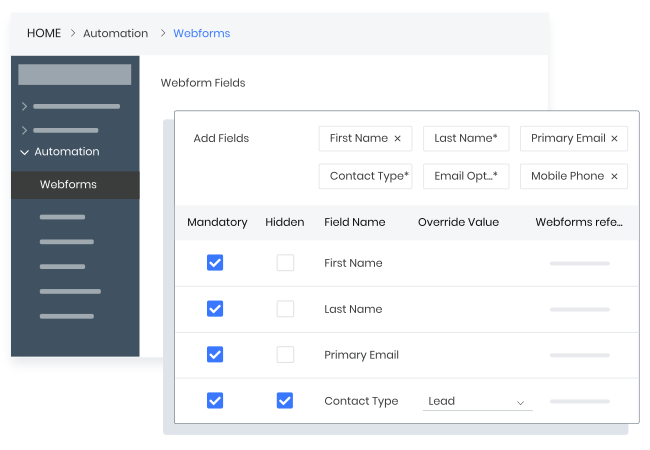
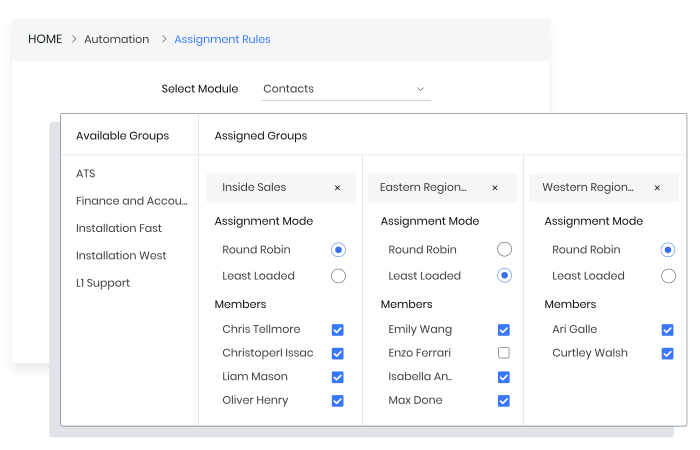
Vtiger CRM automatically assigns agents leads based on location, deal size, and availability. This ensures that each lead is handled by the right agent, speeding up the response time and improving lead conversion.

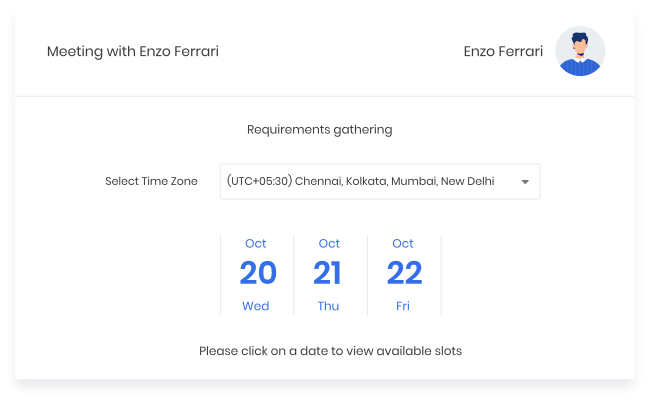
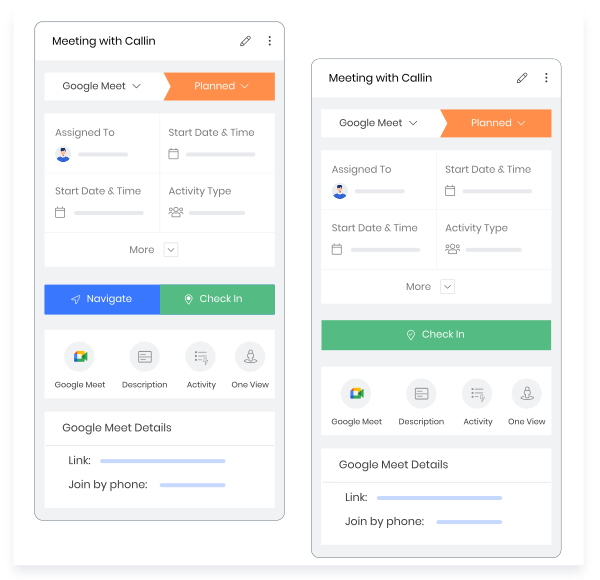
Vtiger CRM simplifies site visits by allowing leads to book or reschedule appointments quickly. It also helps agents optimize visits with real-time check-ins and tracks time spent at each site for better compliance.

Vtiger CRM enables real estate companies to send Email and SMS campaigns to nurture leads. It also provides insights into campaign performance, helping businesses refine their messaging, improve targeting, and increase conversions.

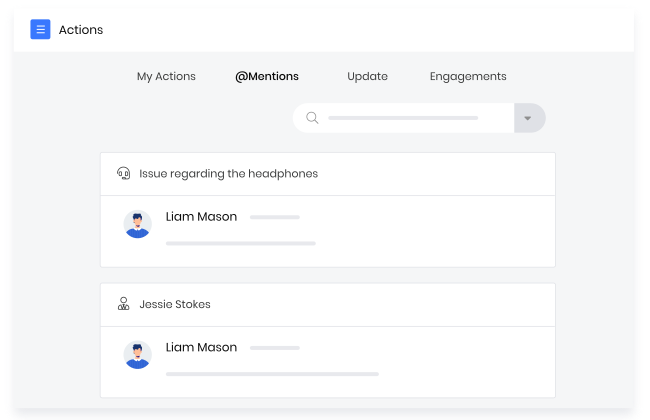
Vtiger CRM fosters collaboration through @mentions and internal chat features, allowing team members to communicate about deals and share updates easily. This ensures faster decision-making and seamless teamwork across departments.

Yes. Property inquiries usually arrive while agents are already handling calls, visits, or documents. When leads come from portals, websites, phone calls, or campaigns, the CRM captures them at the moment they appear and places them into the same working flow. Source details stay attached to each inquiry, which helps agents respond with context. Over time, this also reveals which portals consistently lead to site visits and active conversations.

Property deals change shape as buyers visit sites, ask questions, or request documents. The CRM tracks these moments against the same property and buyer record, allowing deal stages to reflect real movement instead of fixed timelines. When visits happen or responses slow down, the pipeline shows that shift clearly. Teams understand which properties are progressing and which conversations are waiting without reconstructing history manually.

Property discussions often start on calls, continue on WhatsApp, and return to email during negotiations. The CRM records these interactions against the same inquiry so agents see the full conversation before replying. Call outcomes, missed attempts, and message history remain visible together. This continuity prevents repeated questions and helps agents respond in line with what was already discussed, even when communication moves across channels.

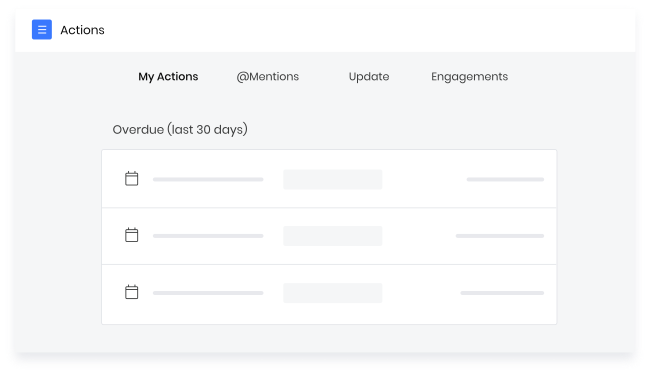
Follow-up delays usually happen when inquiries move out of sight or lose ownership. Vtiger CRM keeps every property inquiry visible from the moment it enters, assigns it clearly, and shows what action is pending. Agents do not need to search for details before responding. Reminders surface follow-ups at the right time, which helps teams respond while the buyer is still engaged and available.

Yes. Revenue in real estate builds across multiple active properties and negotiations at different stages. The CRM tracks where each deal stands, how long it has stayed there, and how similar deals closed earlier. Forecasts form from this live pipeline view, not from estimates made in isolation. Realtors see expected income, agent contribution, and property performance based on current deal movement and past patterns.

Try the best CRM for Real Estate

No credit card required. Cancel anytime.

A recognized leader and top-rated CRM for years