Search Vtiger.com

What is Marketing CRM?

Marketing CRM refers to a CRM platform that supports the techniques and strategies used to increase marketing efforts.

With modern technology, you can go one step further and automate different marketing tasks using marketing CRM software.

CRM with Marketing automation is a technology that automates monotonous marketing activities within the CRM without manual intervention

Setting up workflows helps businesses target prospects with automated messages across multiple digital platforms. Marketing teams use it to increase revenue and improve efficiency.

How a marketing CRM helps businesses

A marketing CRM (Customer Relationship Management) is a centralized container for all customer data and marketing activities. It helps businesses turn raw customer information into effective marketing strategies through automation, analytics, and personalization.

Advanced Lead Scoring and Funnel Optimization

A marketing CRM uses smart scoring models to identify which leads are most likely to convert. It does this by tracking customer behavior, engagement levels, and how well each lead matches your ideal customer profile.

Over time, machine learning refines this process to make it even more accurate, helping reduce the sales cycle and improve lead conversion rates by up to 30–40%.

Real-Time Attribution and Performance Analytics

Marketing CRMs track customer interactions across all channels; social media, email, ads, and more. They help marketers understand which platforms or campaigns drive the best results.

By analyzing metrics like customer lifetime value (CLV) and return on ad spend (ROAS), teams can make smarter decisions about where to spend their marketing budget. Built-in A/B testing and analytics tools also help continuously improve campaign performance based on real data.

Behavioral Segmentation and Predictive Personalization

Using data analysis and clustering, CRMs divide audiences into smaller, more specific groups based on their behavior and interests.

These systems can automatically deliver personalized content and offers through integrated apps and APIs. Predictive tools can also forecast customer behavior, helping businesses retain customers longer and lower customer acquisition costs.

Automated Workflow and Team Collaboration

A marketing CRM saves time by automating repetitive tasks and ensuring smooth coordination between teams.

For example, when a potential customer downloads a whitepaper or shows high engagement, the CRM automatically alerts the sales team, updates their status, and triggers a follow-up sequence. This keeps communication consistent and speeds up response time.

Customer Retention and Loyalty Management

CRMs don’t just help attract new customers; they also keep existing ones happy. They use churn prediction tools to identify customers who might stop engaging, based on their activity and support history.

The system can then automate rewards, reminders, or personalized offers to re-engage them, turning one-time buyers into loyal customers.
What is a CRM Marketing Strategy?

A CRM Marketing Strategy is a well-structured, data-driven approach that uses Customer Relationship Management (CRM) systems to make marketing smarter and more personalized.

Instead of sending the same message to everyone, it helps businesses use real customer data, such as purchase history, website activity, and engagement patterns, to understand what their customers truly want. This allows marketers to design customized campaigns that build stronger connections, increase loyalty, and boost revenue. For example, customer-led marketing is an effective CRM Marketing strategy proven to increase Customer Lifetime Value by 33% on average.

A CRM marketing strategy revolves around understanding and using customer data effectively.

Another important part of CRM marketing is automation. Instead of manually sending follow-ups or tracking leads, CRM tools automate these processes; sending the right message at the right time. This not only saves time but also ensures consistent, well-timed communication with every customer.

CRM systems also help businesses map the entire customer journey, from the first point of contact to post-purchase engagement. A CRM provides real-time insights to show what’s working and what’s not. This allows marketers to adjust and improve their strategies continuously.

Difference between CRM and marketing automation

A CRM is used to store, organize and manage detailed information about leads and customers in a centralized data management system. It can track historical data, understand customer interactions with business, improve business relationships, etc.

Marketing automation software is primarily used to boost marketing activities. For example, you can test and track the performance of campaigns, monitor the click-through rate of a specific ad campaign, etc.

Read CRM for SMB Marketing: The Ultimate Guide

Marketing automation in CRM

Integrating both technologies provide a holistic view of the customer journey, shortens the sales process, and improves ROI. Leverage customer data to design, plan, execute, and automate marketing activities.

Key Features

Capture leads from different channels like web forms, social media, etc. integrated into the CRM.

Improve sales pipeline by observing the step-by-step progression of lead.

Learn about your target audience from the wealth of information that CRM provides. Understand the demographics, and behavioral patterns of customers from the data and segment them for targeted campaigns.

Send hyper-personalized email campaigns by looking at the data like lead source, frequently purchased products, previous conversations, etc. Use A/B testing for specific target audiences.

Make informed decisions from the data generated and improve team performance.

Marketing Automation in Vtiger CRM

Vtiger Marketing Automation offers inbuilt resources to expand marketing activities

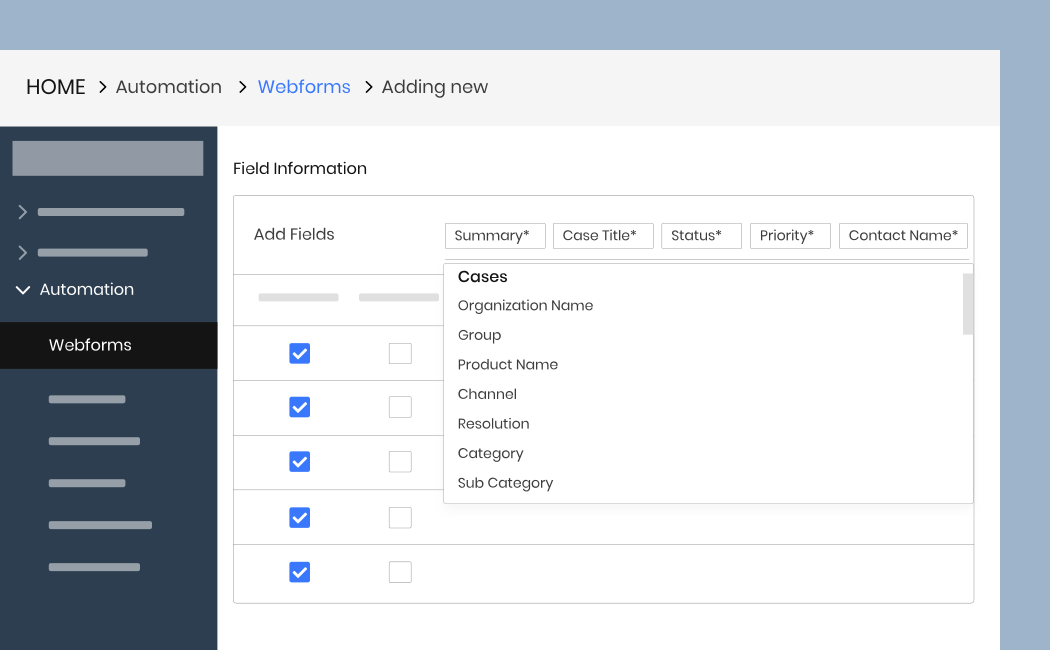
Simplify your lead generation using Vtiger Webforms, Enrich

Assign quality leads to the sales team for fast closures. Implement Vtiger Webforms to improve lead scoring and nurturing on your website.

Leverage Vtiger Enrich to transfer customer data into CRM from social media profiles.

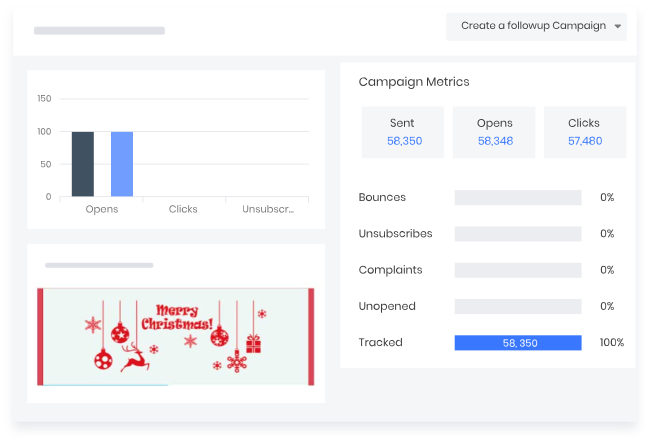
Launch emails and SMS campaigns

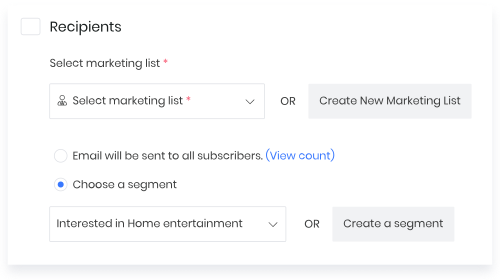
Segment your clientele using marketing lists and tailor the content to send personalized emails.

Use pre-configured SMS extensions to entice customers via text messages.

Gain more traction using Email marketing and SMS campaigns.

Capture and engage visitors with landing pages

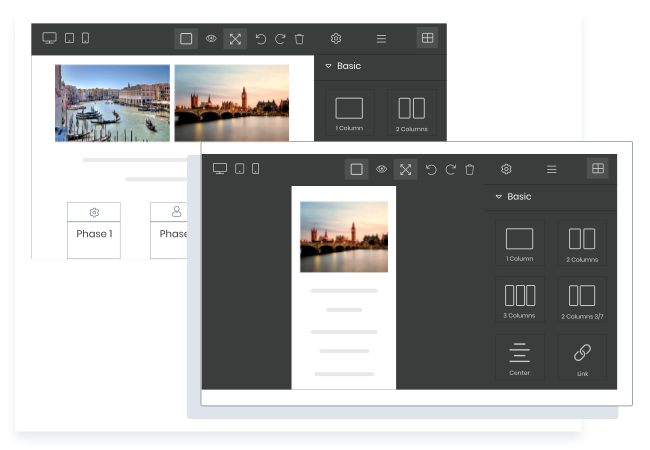
With a simple drag-and-drop action, you can easily create, edit, and publish specific responsive web pages with CTAs using Landing pages.

Send custom survey campaigns

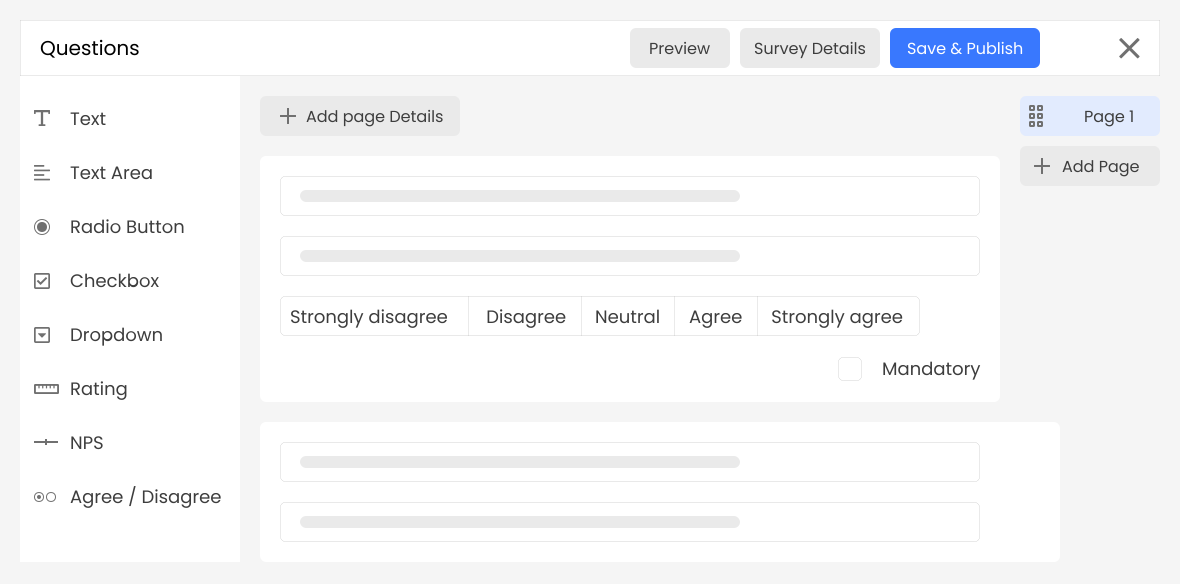
Create and distribute surveys to your customers and keep track of how they perform.

Monitor customer engagement with your social media profiles directly from CRM

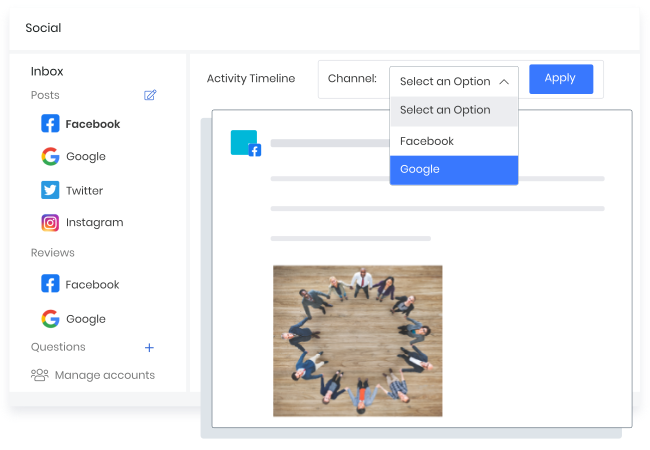
Interact with your customers on social media channels such as Google My Business, Facebook, Twitter, and Instagram from the CRM using Vtiger Social.

Analyze and track your campaigns

Use data from previous campaigns to boost response rates. Plan and perform ahead of time to keep your team organized.

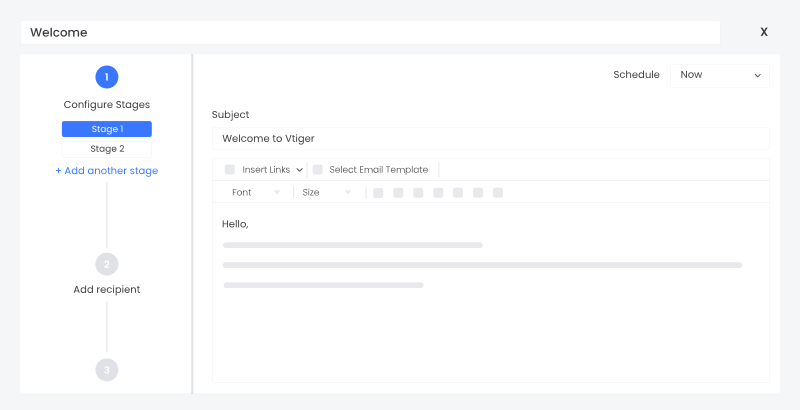
Automate sending emails with Vtiger Email Sequences

Send a predefined set of emails to improve engagement and cut down manual efforts with Vtiger Email Sequences. Minimize the effort of sending emails manually and monitor customer engagement levels frequently.

Benefits of CRM in marketing

When businesses start managing customer data the right way, decisions stop being based on assumptions. A CRM for marketing helps leaders see what’s working, what’s not, and where the next opportunity lies. It doesn’t just align teams; it aligns intent, execution, and outcomes under one measurable system.

Improved Customer Understanding 

A CRM centralizes every data point from ad clicks to post-sale interactions. This creates a single source of truth for marketing and sales teams. For a CMO, it means finally having a clear view of how acquisition, engagement, and retention connect to actual revenue outcomes. 

Predictive CRM analytics improve customer profitability by up to 30%.

Increased Loyalty and Retention 

Retention is often treated as a support function, but CRM brings it into the marketing core. With data on frequency, recency, and engagement levels, marketing operations can forecast churn and trigger automated retention workflows. This transforms retention from reactive communication to proactive growth planning.

Enhanced Engagement 

CRM creates a connected view across digital, social, and performance channels. It allows marketing teams to see how each channel contributes to the targeted sentiment of every campaign. Along with this, even spend optimization becomes easier because decisions are based on customer movement through the funnel, not just impressions or clicks. For a marketer, it brings confidence that budget shifts are backed by credible data.

Targeted and Effective Campaigns 

CRM bridges the long-standing gap between campaign metrics and actual sales data. Every lead is tracked through to revenue, showing which marketing efforts create measurable impact. This gives CMOs the evidence to defend budgets and challenge inefficiencies with clarity. It replaces guesswork with financial accountability.

Streamlined Processes and Automation 

CRM automation transforms how marketing operations run. It removes repetitive tasks such as manual follow-ups, lead routing, and report compilation. Campaigns move faster, tracking becomes more accurate, and handovers between teams are smoother. For marketing leaders, this means higher output, fewer operational bottlenecks, and the ability to scale campaigns without increasing headcount.

Advanced Lead Nurturing

CRM-powered automation ensures every lead receives relevant communication at the right time based on behavior and engagement level. Leads are nurtured through targeted workflows until they are ready for sales. This structured process improves the quality of marketing-qualified leads, raises the MQL-to-SQL conversion rate, and shortens the overall sales cycle. It turns lead nurturing from a manual chase into a data-driven growth system.

Enhanced Collaboration 

CRM creates a single, reliable source of customer and campaign data for marketing, sales, and service teams. This shared visibility eliminates data silos and reduces duplicate efforts. Teams can align on goals, track shared KPIs, and execute strategy in sync. For leadership, this results in unified messaging, smoother coordination, and a consistent customer experience across all touchpoints.

CRM marketing examples and strategies

CRM marketing (Customer Relationship Management marketing) is a highly intelligent, data-driven discipline. By merging automation, analytics, and omnichannel communication, CRM platforms help brands anticipate customer needs, personalize interactions, and drive long-term loyalty.

1. Set Clear Goals and KPIs

The most successful businesses define a limited set of three to four key performance indicators (KPIs) such as lead conversion rate, customer retention percentage, and average deal closure time. CRMs can be configured to track these metrics through dynamic dashboards, offering real-time visibility for marketing and sales leaders. 

2. AI-Powered CRM and Automation

Artificial Intelligence (AI) is now the operational core of advanced CRMs. It enables predictive lead scoring, deal forecasting, and automated follow-ups without human intervention. 

Technical implementation examples include:

  • AI models customized for industry-specific predictive analytics.
  • Automated ticket routing and chatbots integrated into the CRM, offering 24/7 assistance.
  • AI-assisted content recommendations that help sales reps craft personalized email follow-ups faster.

3. Omnichannel and Unified Customer Experience

Modern CRM ecosystems unify all communication channels; email, chat, SMS, social media, and phone into one synchronized platform. This ensures seamless handoffs between marketing, sales, and support teams.

For example:

  • A customer support agent can view social media messages, email tickets, and phone interactions within the same CRM record.
  • Mobile CRM applications and API integrations ensure that engagement data flows smoothly between systems.

4. Automated Lead Nurturing and Event-Triggered Marketing

CRM automation can transform how leads are nurtured.

Practical technical actions include:

  • Behavior-based automation rules that send targeted offers when a customer downloads a whitepaper or abandons a cart.
  • Internal notifications to sales reps triggered by prospect engagement spikes.
  • Personalized drip email or SMS sequences that guide users through the purchase funnel at the right cadence.

5. Data-Driven Personalization and Content Marketing

Modern CRMs serve as engines of precision personalization. They centralize customer behavior, demographic data, and purchase history to inform highly relevant content strategies.

Examples of data-driven implementations:

  • Dynamic content modules in emails and landing pages that adapt to user interests.
  • Automated surveys post-purchase that collect customer satisfaction data for future segmentation.
  • Content recommendation engines integrated with CRM to deliver webinars, case studies, or eBooks aligned to individual needs.

6. Account-Based Marketing (ABM)

Account-Based Marketing focuses on high-value clients by using CRM data.

With CRM-powered ABM dashboards, marketing and sales teams can:

  • Identify key stakeholders across decision-making hierarchies.
  • Track interactions across email, meetings, and campaigns.
  • Automate custom follow-ups and event invitations.

7. Social Media CRM Integration and Listening

Integrating social media tools into the CRM creates a real-time listening and engagement hub. CRMs can automatically track mentions, analyze sentiment, and tag leads based on interactions.

Practical examples:

  • Integration with LinkedIn or X (formerly Twitter) lets reps view a contact’s recent posts or messages in the CRM.
  •  Sentiment analysis engines classify comments as positive, neutral, or negative.
  • Automated workflows trigger responses or escalation tickets for complaints.

Why is Vtiger the #1 Company for CRM Marketing?

Since 2004, Vtiger has made CRM software accessible and affordable for small and medium-sized businesses. Their mission is simple: help teams build strong, lasting customer relationships. Trusted by over 300,000 businesses worldwide; from major corporations to small shops, Vtiger offers easy-to-use tools across web and mobile platforms. 

With an active community in 110+ countries, Vtiger brings together 20 years of experience with a clear focus on what businesses really need: practical CRM solutions that connect teams with customers and help companies grow. It’s powerful software made simple for real-world success.​​​​​​​​​​​​​​​​

Contact us today to request a Web demo and learn how you can use Vtiger to convert more customers, increase the spend of existing customers and reduce customer churn.

Frequently Asked Questions

A general CRM is an organization-wide tool used by various departments, including sales and customer service, to manage all customer interactions. A Marketing CRM, in contrast, focuses specifically on managing customer relationships through the lens of marketing campaigns, with features for lead generation, nurturing, and audience segmentation.

A Marketing CRM supports business growth by centralizing customer data, enabling more accurate audience segmentation, and automating repetitive marketing tasks. This leads to personalized messaging that increases customer engagement, improves conversion rates, and boosts customer retention.

Essential features include contact management for organizing customer data, audience segmentation for targeted messaging, and marketing automation for tasks like email sequences. Strong analytics and reporting capabilities are also critical for measuring campaign performance and gaining customer insights.

A Marketing CRM collects and organizes customer data from various sources, such as website visits, social media activity, and purchase history. It then uses this information to segment customers into groups and execute personalized marketing strategies, helping marketers deliver the right message at the right time.

Yes, a Marketing CRM can and should be used in conjunction with the sales team. By providing shared access to a unified customer view, the Marketing CRM helps align marketing and sales efforts. This ensures a smoother handover of qualified leads, which can shorten sales cycles and increase close rates.

Marketing automation uses a Marketing CRM to automatically perform repetitive tasks based on preset triggers, such as customer behavior or milestones. For example, a system could automatically send a personalized email to a lead after they download a whitepaper from your website, nurturing them further down the sales funnel.

By analyzing customer behavior and purchase history, a Marketing CRM helps businesses deliver personalized communication and offers, which makes customers feel valued. This strategy helps foster stronger relationships, ultimately increasing customer loyalty and reducing churn.

No, a Marketing CRM is not just for large enterprises. Small and medium-sized businesses can also use it to manage customer relationships, automate tasks, and segment audiences. Many providers offer scalable and affordable options designed to grow with a company.

Common challenges include ensuring user adoption across teams, maintaining high-quality and accurate data, and integrating the CRM with other software in your technology stack. It is also important to avoid over-automating complex processes that still require human judgment.

To measure ROI, you should track and analyze key metrics, such as lead-to-customer conversion rates, customer lifetime value (CLV), and customer acquisition cost (CAC). The data and reporting tools in the CRM will provide the insights needed to evaluate which campaigns are most effective and showcase the value of your investment.

Sign up for Vtiger CRM to amplify your marketing efforts

No credit card required. Cancel anytime.