Acquiring new customers remains the top marketing objective for more than 60% of B2B businesses in 2015. Meanwhile, customer retention programs often take a back seat. Econsultancy notes that businesses spend on average twice as much on acquiring new customers as they do on retaining existing customers. This failure to re-engage existing customers leads to a loss on as much as 150% in extra revenue and 600% in profit per customer, among other benefits.
Let’s take a look at why retaining existing customers can transform a business’s growth.
What Is Customer Retention?
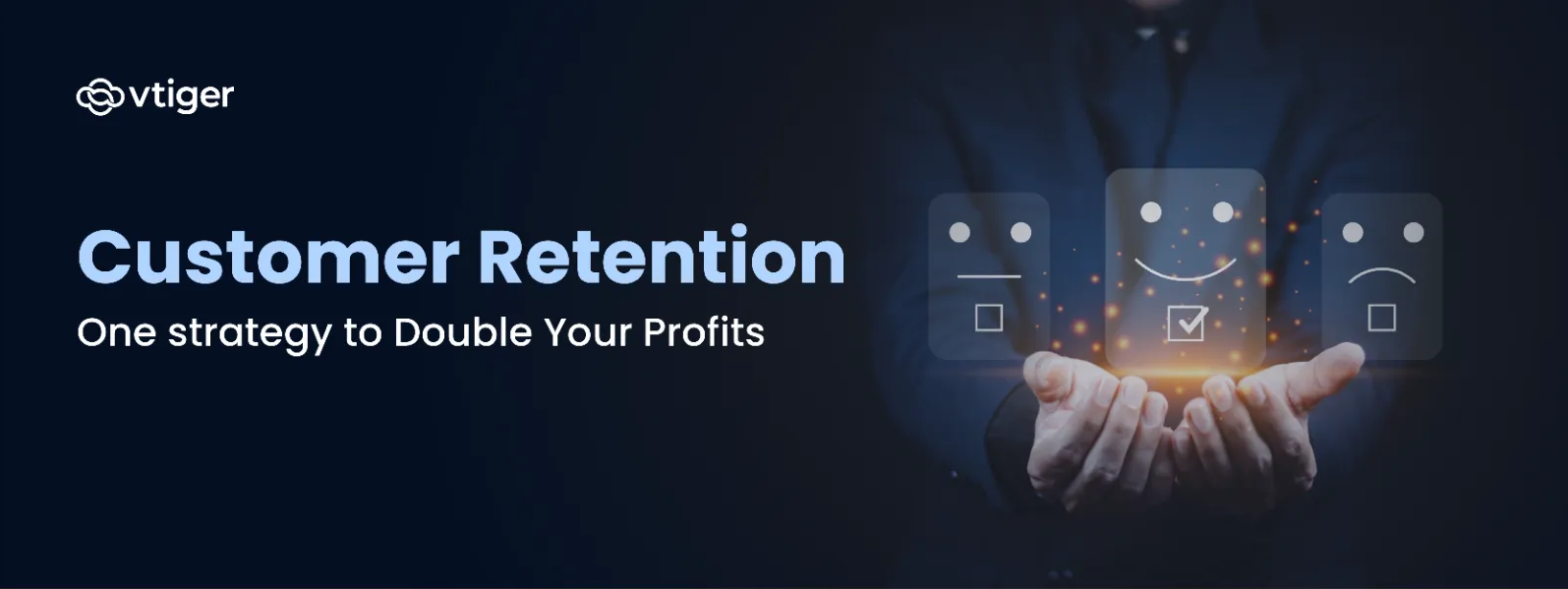
Customer retention means keeping your existing customers connected to your business so they continue to buy from you over time. It happens when customers return for repeat purchases, renew their subscriptions, or choose you again instead of competitors. Retention shows that customers trust your brand and are satisfied with their experience. Strong customer retention also means your business is building lasting relationships, not just making one time sales and moving on.
Why Customer Retention Is Important for Business Growth in 2026
Business growth in 2026 depends less on how many new customers you attract and more on how many you keep. Rising advertising costs and crowded markets have made retention one of the most reliable drivers of profit, stability, and long term expansion.
Acquiring new customers is expensive

Acquiring new customers costs a lot of time and money. The average business spends anywhere between $7 to $315 on marketing to acquire just one new customer. This consists of the actual spend on campaigns, plus time spent planning effective adwords, retargeting, social media initiatives. For most businesses, the probability that a new prospect makes a purchase is just 5-20%, putting the cost of generating an actual purchase between 5 and 20 times higher. By spending just 1/5th of that customer acquisition cost, however, businesses can generate a 60-70% chance of sale from an existing customer over their lifetime.
Return customers are worth more in revenue and profit

The average customer increases his or her spending with a company later in a relationship. According to a study by Bain, in the online retail industry, the average repeat customer spends 67% more per year, despite costing less to retain, just three years from their first purchase. By HBRs measures, some businesses can almost double profit by improving customer retention by just 5%.
Loyal customers help acquire new ones at a lower cost

Word-of-mouth marketing is the best marketing tool that a business can have. Bain notes that a second-time customer refers an average of 3 people and the number grows with increases with the number of repeat purchases.
Loyal customers are less sensitive to price changes
When customers grow loyal to your brand, they are less sensitive to price changes. Repeat customers are more likely to buy from you than the competition, even if business or market conditions force you to increase your prices.
Customer retention should be a business priority, rather than a convenience. When businesses compete for the same customers, strong customer relationships provide a competitive edge. Both CRM and helpdesk systems are powerful tools that give customer-facing employees a complete picture of customer needs and buying habits that help them deliver greater customer value. Stay tuned for our next article to learn how to use Vtiger CRM to improve relationships and build a loyal customer base.
Key Difference Between – Customer Retention vs Customer Acquisition
Customer retention and customer acquisition serve different roles in business growth. Acquisition focuses on bringing new customers while retention focuses on keeping existing customers engaged and buying. Both are important, but retention often delivers faster profits and more stable revenue because trust and relationships already exist.
| Aspect | Customer Retention | Customer Acquisition |
| Definition | Focuses on keeping existing customers loyal and active | Focuses on attracting new customers to the business |
| Cost | Lower cost because relationship already exists | Higher cost due to marketing, advertising, and outreach |
| Conversion rate | Higher probability of repeat purchase | Lower probability of first purchase |
| Revenue impact | Increases lifetime value and repeat revenue | Generates new but less predictable revenue |
| Time to results | Faster results due to existing trust | Slower results due to awareness and decision cycle |
| Marketing effort | Requires personalized engagement and support | Requires large scale campaigns and promotions |
| Business stability | Creates predictable and stable income | Creates growth but with higher uncertainty |
5 Proven Customer Retention Strategies that Actually Work
Strong results come from systems that listen, guide, engage, and reward customers at the right moments. These proven customer retention strategies help businesses reduce churn and build lasting relationships.
Customer feedback loops
Feedback becomes powerful only when customers see action taken. A closed loop system collects feedback, analyzes it, fixes the issue, and informs the customer about the improvement. This builds trust and shows respect for their voice. Tools like Net Promoter Score, Customer Satisfaction Score, and Customer Effort Score help capture feedback after key moments such as purchase or support interaction.
Omnichannel customer engagement strategy
Consistency across channels creates comfort. Conversations should continue smoothly whether the customer moves from email to chat to phone. No one likes repeating their story again and again. A unified system ensures every team member sees the same history and responds with full context. This creates continuity and strengthens client retention.
Customer education and onboarding programs
Early success shapes long term loyalty. Customers who understand your product quickly are more likely to stay. Educational webinars, onboarding emails, and knowledge guides help customers reach their first success moment faster. This reduces confusion and builds confidence in your product.
Personalized experiences using AI
Personalization goes beyond using a first name. AI studies behaviour and recommends relevant features or products. Customers receive suggestions based on their actions and interests. This makes interactions feel more meaningful and naturally increases engagement.
Loyalty programs and incentives
Rewards create emotional connections. Loyalty programs that offer exclusive access, early feature releases, or recognition keep customers engaged. Gamified systems such as badges and progress levels encourage continued participation.
5 Best Ways to Improve Customer Retention
Customer retention improves when businesses act before customers lose interest. These practical steps help strengthen relationships and prevent churn.
- Identify at risk customers: Customer activity patterns reveal early warning signs. Reduced usage often signals disengagement.
- Surprise loyal customers: Unexpected rewards such as exclusive content or anniversary gifts create a positive emotional impact.
- Proactive customer support: Early resolution of technical issues prevents frustration and protects customer trust.
- Build customer communities: Online forums and groups enable customers to learn from one another and stay connected.
- Win back inactive customers: Targeted campaigns and special offers encourage inactive users to return and re engage.
Key Customer Retention Metrics You Should Track
Customer retention can be measured through specific performance indicators. Tracking these metrics helps businesses understand loyalty, engagement, and churn risk.
| Metric | What It Measures | Why It Matters |
| Customer churn rate | Percentage of customers leaving | Shows retention performance |
| Customer lifetime value | Total revenue per customer | Indicates long term profitability |
| Repeat purchase ratio | Percentage of repeat buyers | Reflects loyalty strength |
| Net promoter score | Customer recommendation likelihood | Measures satisfaction and advocacy |
Monitoring these customer retention metrics helps businesses refine their resultant strategies and improve results.
How to Calculate Customer Retention Rate
Customer retention rate shows how many customers stay with your business over time. This metric reveals relationship strength and customer satisfaction.
Formula includes three values:
- Customers at start of period
- Customers at end of period
- New customers acquired
The Formula:
[(E−N)/S]×100
[(E−N)/S]×100.
- E = Number of customers at the end of a period.
- N = Number of new customers acquired during that period.
- S = Number of customers at the start of that period.
Higher percentages indicate stronger client retention performance.
Best Customer Retention Tools & Software
Technology plays a major role in modern customer retention strategies. The right tools help track behaviour, automate engagement, and predict churn.
CRM tools
CRM systems create a complete customer view. Vtiger One View combines marketing, sales, and support data into one dashboard. Teams can see customer history, preferences, and interactions instantly. This unified visibility improves response quality and strengthens relationships.
Email and automation tools
Automation ensures consistent communication. Vtiger Workflows send re-engagement emails automatically when activity drops. Timely messages remind customers of the value and encourage continued use. .
Customer support platforms
Customer support shapes loyalty. Vtiger Help Desk manages customer cases and ensures timely responses. Service level tracking ensures no issue gets ignored. Reliable support builds confidence and improves client retention.
AI powered retention tools
Artificial intelligence helps predict customer behaviour. Vtiger Calculus AI analyzes conversations, detects negative sentiment, and predicts churn risk. Early warnings allow teams to intervene and protect customer relationships.
Real-World Examples of Successful Customer Retention
Customer retention improves when companies give customers clear reasons to stay and continue using their products or services. Some well known businesses have built simple systems that keep customers coming back regularly.
- Slack and Canva education: Feature tutorials, onboarding emails, and guides help users understand the product better and continue using it regularly.
- Amazon Prime benefits: Fast delivery, exclusive deals, and streaming services give customers ongoing reasons to maintain their membership.
- Starbucks reward system: Points, free items, and member rewards encourage customers to return and make repeat purchases more often.
- Vtiger unified data: Shared customer information helps teams respond faster, improve support quality, and strengthen overall client retention.
Future of Customer Retention: AI, Automation & Personalization
Customer retention in the coming years will depend on how well businesses understand customer behaviour and respond at the right time. Artificial intelligence and automation are helping companies identify risks early, personalize communication, and improve client retention more efficiently.
Hyper personalization
Customer communication is becoming more individual focused. AI studies customer activity, product usage, and preferences to send relevant messages. Customers receive recommendations, reminders, and support based on their actual behaviour, which improves engagement and strengthens relationships.
Predictive analytics
Customer data now helps predict future actions. AI tools analyze usage patterns and identify customers who may stop using the service. Early alerts allow businesses to take action through support, offers, or engagement before the customer leaves.
Voice of customer tracking
Customer opinions shared through emails, support conversations, and reviews provide valuable signals. AI tools analyze this feedback to detect dissatisfaction, helping businesses fix problems quickly and improve overall experience.
Automation support
Automation handles routine communication such as reminders, onboarding emails, and follow ups. This allows human teams to focus on solving important problems and building stronger customer relationships.
Frequently Asked Questions (FAQs)
What is considered a good customer retention rate?
A good customer retention rate usually falls between 70 and 90 percent, depending on industry, business model, customer expectations, and purchase frequency patterns.
What is a customer retention program and how does it work?
A customer retention program includes strategies like support, engagement, rewards, and communication designed to keep customers satisfied, active, and loyal over longer periods.
What are the three key pillars 3 R’s of customer retention?
The three R’s include Retention, Relationships, and Revenue, focusing on keeping customers engaged, building trust, and increasing their long term business value.
Why is customer retention important for business growth?
Customer retention improves profitability, increases repeat sales, lowers marketing costs, builds brand loyalty, and creates predictable revenue that supports stable long term growth.
How can businesses improve customer retention effectively?
Businesses improve retention through better customer service, personalized communication, loyalty programs, proactive support, onboarding guidance, and consistent value delivery across customer lifecycle stages.
Which metrics are used to measure customer retention?
Common metrics include retention rate, churn rate, customer lifetime value, repeat purchase ratio, and Net Promoter Score, measuring satisfaction and loyalty levels.
How does customer retention impact customer lifetime value CLV?
Higher customer retention increases customer lifetime value because customers stay longer, buy more frequently, and contribute more total revenue over time.
What are common customer retention challenges and solutions?
Common challenges include poor support, low engagement, and competition, while solutions include personalization, faster support, loyalty programs, and proactive communication strategies.