Every business reaches a point where it needs to move faster. A product launch that needs traction, a quarter running behind target, or a competitor gaining ground. Sales promotion is how businesses respond to these moments and create immediate reasons for customers to act.
Sales promotion has been part of marketing for as long as businesses have competed for customers. What has changed is how targeted and measurable it has become. Early promotional campaigns were broad and difficult to track. Today, a well-run digital sales promotion reaches the right customer at the right moment, with an offer shaped specifically for them, and every click, conversion, and drop-off gets recorded.
What is Sales Promotion?
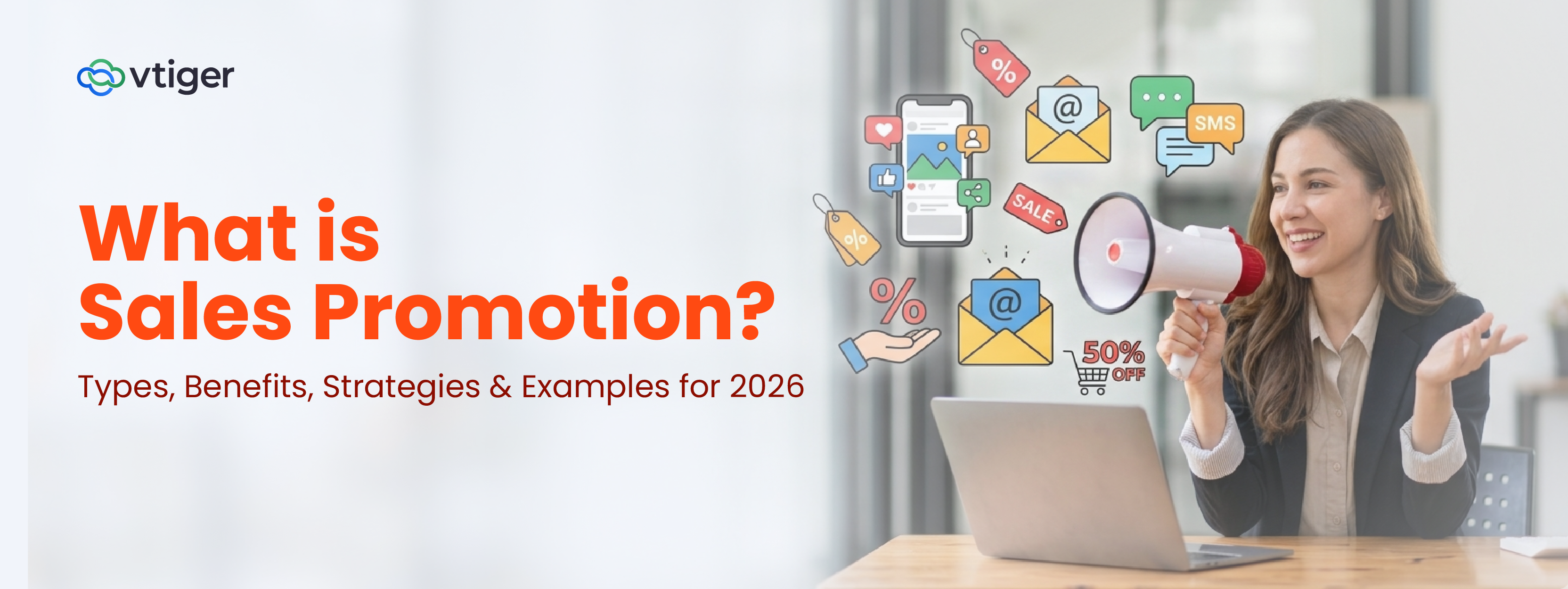
Sales promotion is a set of short-term incentives designed to stimulate customer interest, accelerate purchase decisions, and increase sales volume. It sits alongside advertising and personal selling as one of the core tools in the marketing mix, but it operates differently from either.
Advertising builds awareness and shapes perception over time. Sales promotion creates an immediate reason to act. A customer who is aware of a product but has not yet bought it might be moved to purchase by a well-timed promotional campaign offering a discount, a free trial, or a bonus. That is the core function of sales promotion: closing the gap between interest and action.
The difference between advertising and sales promotion comes down to timeframe and mechanism. Advertising is continuous, brand-building communication. Sales promotion is targeted, time-bound, and incentive-driven. Both serve important purposes, but they are not interchangeable. A business running only advertising without any promotional marketing will build awareness, but may struggle to convert it at the pace a competitive market demands.
Sales promotion works across four main objectives:
- Short-term sales growth by creating urgency through discounts, limited-time offers, and exclusive deals that push undecided buyers toward a purchase
- Customer engagement by giving existing customers a reason to interact with the brand, whether through loyalty programs, contests, or referral schemes
- Brand awareness by getting products in front of new audiences through promotions that encourage sharing, trial, or participation
- Lead generation and conversions by attracting prospects into the sales funnel through free trials, samples, or incentivized sign-ups and moving them through to a paid relationship
Why Sales Promotion Matters in 2026
Customer acquisition costs have gone up significantly across most industries over the past few years. Paid advertising has become more expensive and competitive, while organic reach on social platforms has narrowed. In this environment, well-designed sales promotion strategies have become a more cost-effective way to drive conversions because they give customers a specific, tangible reason to act rather than simply reminding them that the product exists.
Customers today also expect offers to feel relevant to them. A generic 10% off email sent to an entire database is far less effective than a personalized promotion triggered by something specific that the customer did. AI-driven targeting has made the second approach accessible to businesses of all sizes. The companies investing in personalized promotional campaigns are seeing better results because the offer lands at a moment when the customer is already thinking about the product.
The types of businesses benefiting most from modern promotional marketing reflect how broadly the need applies:
- E-commerce businesses use flash sales, cart-abandonment promotions, and loyalty rewards to keep conversion rates high in markets where the next competitor is just one click away.
- Retail brands run seasonal promotions and in-store incentives tied to digital campaigns, so customers receive the same offer whether they shop online or in person.
- SaaS companies rely on free trials and referral programs as primary consumer sales promotion tools because reducing the risk of trying the product is often the biggest barrier to conversion
- B2B organizations use B2B sales promotion techniques like trade incentives, volume discounts, and account-specific offers to strengthen distributor relationships and accelerate deal cycles.
Types of Sales Promotion
Businesses use different types of sales promotion depending on their audience, their sales goals, and the channels they operate on. Some sales promotion techniques work better for consumer audiences. Others are better suited to B2B contexts or specific stages of the customer journey. Understanding the options makes it easier to choose the right approach for each situation.
1. Discount Promotions
Discounts are the most commonly used type of sales promotion. They reduce the price of a product or service by a fixed amount or percentage for a defined period. Seasonal discount promotions, clearance sales, and subscriber-only pricing all fall into this category.
Discount promotions work well for moving volume quickly and attracting price-sensitive customers. The risk is that overusing them trains customers to wait for a sale rather than buying at full price. Businesses that run discount promotions selectively and with clear time limits tend to see better results than those that make discounting a habit.
2. Coupons and Promo Codes
Coupons and promo codes are targeted forms of digital sales promotion that allow businesses to deliver offers to specific customer segments without reducing prices across the board. A new customer might receive a first-purchase promo code. A lapsed customer might get a win-back coupon. A high-value customer might receive an exclusive code as a loyalty reward.
The advantage over blanket discounts is control. Businesses can track which promotional campaigns drive conversions, which segments respond, and the actual cost of each customer acquisition. Vtiger’s marketing automation tools make it straightforward to segment customers and trigger the right promo code at the right time based on CRM data.
3. Buy One Get One (BOGO) Offers
BOGO promotions give customers an additional product or service at no extra cost when they make a qualifying purchase. They are among the more effective sales promotion techniques for increasing average order value and moving inventory because customers perceive high value without feeling the price is reduced.
For SaaS businesses, BOGO-style promotions often take the form of extended trial periods or additional user licences. For e-commerce and retail, they are typically used for physical product bundling. B2B sales promotion campaigns sometimes use a version of this with added services or extended contracts rather than physical goods.
4. Free Trials and Samples
Free trials and samples are among the most effective consumer sales promotion tools for businesses whose main barrier to conversion is product uncertainty. When a customer is unsure a product will work for them, the best argument is to let them experience it firsthand.
SaaS companies use free trials as their primary top-of-funnel sales promotion strategy. A customer who has used the product for two weeks is far more likely to convert than one who has only read about it. Product samples in retail serve the same purpose: getting the product into the customer’s hands removes the risk that was holding them back.
5. Loyalty Programs
Loyalty programs reward customers for repeat purchases and ongoing engagement. Points systems, tiered membership, exclusive member offers, and early access to new products are all common formats. The goal of a loyalty-based sales promotion strategy is not just to reward customers who would have bought anyway, but to change behaviour by making continued purchasing more attractive.
When loyalty program data feeds back into a CRM, it becomes a valuable source of insight for future promotional campaigns. Businesses can see which customers are most engaged, which reward tiers drive the most incremental purchases, and which promotional offers generate the highest lifetime value.
6. Referral Programs
Referral programs turn existing customers into a sales channel. By offering a reward for successful introductions, whether that is a discount, credit, or gift, businesses use customer trust to reach new audiences that advertising alone would struggle to convert.
Referral-based promotional campaigns work particularly well because the person being referred starts with a higher level of trust than a cold prospect. They have heard about the product from someone they know. The conversion rate for referred leads is consistently higher than for most other acquisition channels, making referral programs one of the most cost-efficient sales promotion techniques available.
7. Flash Sales and Limited-Time Offers
Flash sales and limited-time offers create urgency by making a promotion available for a short, defined window. Customers who are sitting on the fence make a decision because the offer will not be there tomorrow. These are among the most conversion-focused sales promotion techniques because they work on the simple principle that people act faster when the window is closing.
The key to running effective flash sales is making the time limit credible. If the same sale runs every week, customers stop believing it is actually limited. Used selectively, flash sales as part of a broader digital sales promotion strategy can generate significant short-term revenue spikes without damaging the perception of the regular price.
8. Cashback Promotions
Cashback promotions give customers a portion of their purchase price back after completing a transaction. They are a popular sales promotion technique in both retail and financial services because they feel like a reward rather than a discount, which tends to preserve the perception of product value better than a straight price reduction.
Cashback offers are also effective for customer retention. A customer who knows they will receive cashback on future purchases has an additional reason to stay with the brand rather than switching to a competitor offering a lower headline price.
9. Contest and Giveaway Campaigns
Contests and giveaways generate brand awareness and social media engagement by encouraging customers and prospects to participate in exchange for a chance to win something valuable. These promotional campaigns work well for building an audience, growing email lists, and increasing social following in a short period of time.
The quality of the prize determines the quality of the audience. A prize relevant to the product attracts people who are genuinely interested in what the business offers. A generic prize attracts entries from people who have no interest in the brand, which inflates numbers without improving the actual customer base.
10. Trade Promotions
Trade promotions are B2B sales promotion activities directed at distributors, resellers, and channel partners rather than end consumers. Volume discounts, co-operative advertising funds, display allowances, and sales performance incentives all fall under this category.
For businesses that sell through intermediaries, trade promotions are as important as consumer sales promotions because the distributor’s level of enthusiasm and commitment directly affects how prominently the product gets positioned and promoted. A well-structured trade promotion program is one of the cornerstones of an effective B2B sales promotion strategy.
How Sales Promotion Works
A sales promotion does not run itself. Behind every promotional campaign that generates real results is a process that starts before the first offer goes out and continues well after the campaign ends. Understanding this process is what separates promotional marketing that moves the needle from promotional marketing that just costs money.
Step 1: Define Campaign Goals
Every sales promotion should start with a specific, measurable goal. Is the objective to acquire new customers, increase average order value, re-engage lapsed buyers, or move excess inventory? The goal determines which type of promotion to use, which audience to target, and how to measure success. Reviewing sales promotion examples from similar businesses is a useful way to understand what goals are realistic before committing to a campaign structure.
Step 2: Identify Target Customers
Sales promotion techniques perform significantly better when aimed at the right audience. Customer segmentation using CRM data lets businesses separate new prospects from loyal buyers, high-value accounts from occasional purchasers, and customers who responded to previous promotions from those who did not. Buying behavior analysis adds another layer, identifying which customers are in an active consideration phase and which have gone quiet. Vtiger’s AI CRM surfaces these segments automatically, so promotional campaigns go to the customers most likely to respond.
Step 3: Select the Right Promotion Type
Once the audience is clear, choosing the right type of sales promotion becomes straightforward. New customers unfamiliar with the product respond well to free trials and samples. Price-sensitive buyers are moved by discounts and cashback. Loyal customers respond to exclusive access and loyalty rewards. B2B buyers are more likely to act on volume incentives and account-specific offers. Matching the promotion type to the audience is one of the most important decisions in building an effective sales promotion strategy.
Step 4: Launch Omnichannel Promotional Campaigns
Most customers today interact with businesses across multiple channels before they convert. Promotional campaigns that appear only in email miss customers who are more active on social media or SMS. A consistent digital sales promotion that shows up across email, social media, and messaging performs better than the same offer in a single channel because it meets customers where they actually are.
Vtiger’s workflow automation connects these channels so that a single promotional campaign can trigger personalized messages across email, SMS, and CRM-based outreach without the team having to manage each one manually.
Step 5: Measure Campaign Performance
Conversion rate, cost per acquisition, return on promotional spend, and customer engagement metrics are the numbers that tell you whether a sales promotion is working. Tracking these in real time rather than waiting until the campaign ends gives the team a chance to make adjustments before the budget runs out. A promotion that is converting well in one segment but underperforming in another can be redirected mid-flight.
Step 6: Optimize Future Promotional Campaigns
Every completed promotional campaign produces data that improves the next one. A/B testing different offers, headlines, and timing windows shows what actually drives response versus what seems like it should. AI-driven campaign insights identify patterns that are not obvious from top-line numbers alone. Over time, this feedback loop is what turns promotional marketing from a guessing game into a repeatable process with predictable outcomes.
Benefits of Sales Promotion
When sales promotion strategies are well-executed, the benefits show up across both short-term performance and longer-term customer relationships.
- Increases short-term sales by creating urgency and giving undecided customers a concrete reason to buy now rather than later
- Improves customer engagement through contests, loyalty programs, and interactive promotional campaigns that involve the customer rather than just broadcasting to them
- Boosts brand awareness when promotions are designed to be shared, referral-based, or tied to social media activity
- Encourages repeat purchases through loyalty rewards and cashback promotions that give customers an ongoing reason to stay with the brand
- Helps clear inventory faster by directing attention and demand toward specific products through targeted discount promotions and BOGO offers
- Supports lead generation through free trials, samples, and incentivized sign-ups that bring new prospects into the pipeline without the cost of paid acquisition
- Enhances customer loyalty by making customers feel valued through exclusive access, personalized offers, and recognition for their continued business
- Improves campaign ROI when CRM data is used to target promotions at the customers and segments most likely to convert, reducing wasted spend
Sales Promotion vs Advertising
Both advertising and sales promotion are part of a broader marketing mix, but they work in very different ways and serve different objectives. Treating them as interchangeable leads to campaigns that do neither well.
| Sales Promotion | Advertising |
| Designed to drive immediate action through incentives | Designed to build awareness and shape perception over time |
| Short-term, campaign-specific timeframe | Continuous, long-term brand communication |
| Makes a direct offer: discount, trial, reward | Delivers a brand message: values, positioning, story |
| Measured by conversions, redemptions, and ROI | Measured by reach, recall, and brand sentiment |
| Targets customers already aware of the product | Reaches new audiences who may not know the brand yet |
| Tactical and responsive to market conditions | Strategic and consistent regardless of market conditions |
| Works best when layered on top of brand awareness | Creates the foundation that makes promotions credible |
The most effective approach uses both. Advertising builds the brand equity that makes a sales promotion offer feel credible. A promotion from a brand nobody recognises is far less compelling than the same offer from one customers already trust. Running consistent advertising while using targeted sales promotion techniques at the right moments in the customer journey gives businesses the best of both approaches.
Sales Promotion Strategies by Business Type
The right sales promotion strategy depends heavily on the business model behind it. A promotion that works in retail can fail completely in B2B, and what drives conversions for an e-commerce store often has no equivalent in SaaS. The four business types below each call for distinctly different promotional approaches because the buying decision, the conversion barrier, and the customer relationship work differently in each.
Sales Promotion Strategy for SaaS
SaaS sales promotion centers on reducing the perceived risk of trying the product. Free trials, extended trial periods, freemium tiers, and referral programs designed around in-product activation are the primary tools, because the conversion barrier in SaaS is usually uncertainty about fit rather than price. Annual prepayment discounts and lifetime deal promotions are used selectively to lock in revenue and reduce churn, but only when the customer is already showing engagement signals that suggest long-term retention is likely.
Sales Promotion Strategy for E-commerce
E-commerce sales promotion is built around immediate conversion in a crowded, low-switching-cost market. Flash sales, cart abandonment recovery offers, bundle pricing, and free shipping thresholds drive the bulk of incremental revenue because the next competitor is one click away. Personalized discount codes triggered by browsing behavior or repeat-visit signals consistently outperform broad promotional emails, and loyalty programs become essential for protecting margin against pure-discount competitors over the long run.
Sales Promotion Strategy for B2B
B2B sales promotion looks nothing like consumer promotion. Volume discounts, multi-year contract incentives, account-specific offers, and trade promotions for distributors and resellers are the primary tools. Price-based discounts work less well in B2B because the buying decision is rarely about price alone, and time-bound offers are useful mainly for closing deals already in late-stage negotiation. Trade promotions that strengthen partner and reseller relationships often deliver more value than direct buyer-facing offers.
Sales Promotion Strategy for Retail
Retail sales promotion spans both physical and digital channels, which makes consistency the central strategic challenge. Seasonal promotions, in-store events tied to digital campaigns, loyalty card programs, and member-exclusive pricing all require the same offer to reach the customer through whatever channel they happen to use that day. Without unified customer data feeding both store associates and the marketing team, retail promotions tend to fragment, with conflicting offers reaching the same customer through different channels.
Best Practices for Effective Sales Promotions
These practices apply across consumer sales promotion, B2B sales promotion, and digital sales promotion contexts. They are what separates campaigns that generate lasting value from those that just move numbers for a week.
- Create urgency through limited-time offers and exclusive access rather than defaulting to deeper discounts every time a promotion needs to perform
- Personalize sales promotion strategies for each customer segment using CRM data so offers reflect what each group actually values rather than what is easiest to send to everyone
- Align every promotional campaign with a specific business goal so there is always a clear way to measure whether it worked
- Use CRM and marketing automation tools to manage campaign delivery, personalization, and follow-up without depending on manual effort for every step
- Track promotional campaign performance in real time and build in a review point mid-campaign so adjustments can be made before the budget runs out
- Optimize promotional offers and creative for mobile since the majority of email and social promotional marketing is now opened on a phone
- Combine sales promotion techniques with loyalty programs so customers who respond to a promotion have a reason to stay engaged after the offer ends
- Avoid building a culture of excessive discounting by spacing promotional campaigns out and varying the type of incentive so customers do not simply wait for the next sale
Common Sales Promotion Mistakes to Avoid
Running Promotions Too Frequently
When a business runs promotional campaigns constantly, customers stop buying at full price. They learn to wait. The promotion that was meant to create urgency becomes the expected norm, and the business ends up training its customers to hold out for a deal. Effective sales promotion strategies use promotions selectively so that when one runs, it feels genuinely special.
Poor Audience Targeting
Sending a sales promotion to the wrong audience is a fast way to waste budget. A discount offer sent to customers who would have bought at full price costs money without generating incremental revenue. A B2B sales promotion sent to accounts that are already in late-stage negotiations can actually slow things down by introducing price uncertainty. Good targeting uses CRM data to identify who actually needs an incentive to act and sends the promotion only to them.
Lack of Campaign Tracking
A promotional campaign without proper tracking cannot be improved. If the team does not know which offers drove conversions, which channels performed, and which segments responded, the next campaign starts from the same starting point. Every digital sales promotion should have conversion tracking set up before the campaign launches, not after.
Ignoring Customer Lifetime Value
A sales promotion that acquires customers at a low price point who never return is not a successful promotion, even if the conversion numbers look good. Effective promotional marketing considers what happens after the campaign ends. What is the product or service experience that will keep a customer who came in through a promotional offer? How does the follow-up communication nurture them into a long-term relationship rather than a one-time transaction?
Overdiscounting Products
Repeated deep discounting erodes the perceived value of a product. Customers begin to associate the discounted price with the product’s actual worth, making it very difficult to sell at the original price later. Many sales promotion techniques create genuine value without reducing the price, including free add-ons, extended trials, early access, and exclusive content. Businesses that rely exclusively on price-based promotions end up in a race to the bottom that is very hard to escape.
Weak Post-Promotion Follow-Up
The end of a promotional campaign is not the end of the customer relationship. Many businesses invest heavily in acquiring customers through promotional campaigns and then do almost nothing to keep them engaged afterward. A strong post-promotion follow-up sequence, delivered through CRM-automated email and personalized outreach, is what converts a one-time promotional buyer into a loyal customer.
Frequently Asked Questions
What is sales promotion?
Sales promotion is a marketing strategy that uses short-term incentives to encourage customer purchases. These incentives can include discounts, free trials, rewards, and limited-time offers.
What are the main types of sales promotion?
Common types of sales promotion include discounts, coupons, free trials, loyalty programs, referral programs, and limited-time offers. Businesses also use contests, cashback promotions, and trade incentives to boost engagement and sales.
How does sales promotion help businesses?
Sales promotion supports business growth by increasing customer interest and driving more purchases. It also helps businesses attract new buyers and reconnect with inactive customers.
What is the difference between advertising and sales promotion?
Advertising focuses on building long-term brand awareness and customer perception. Sales promotion drives immediate customer action through short-term offers and incentives.
How does AI improve sales promotions?
AI helps businesses personalize sales promotions based on customer behavior and preferences. It also automates campaign delivery and improves performance using real-time data insights.
What are examples of sales promotion campaigns?
Businesses use different types of sales promotion campaigns to attract and engage customers. Popular examples include discounts, free trials, referral programs, flash sales, and loyalty campaigns.
How do businesses measure sales promotion success?
Sales promotion performance is measured through conversions, customer engagement, and campaign ROI. Businesses also analyze acquisition costs and customer lifetime value to evaluate long-term impact.
What are the risks of excessive sales promotions?
Running sales promotions too frequently can reduce the perceived value of a product and weaken brand positioning. It may also encourage customers to wait for discounts and attract price-focused buyers with low long-term loyalty.