Every sales journey begins long before a customer speaks to a salesperson. Buyers rarely make decisions the moment they discover a product. They spend time comparing alternatives, reading reviews, exploring features, and deciding what matters most to them. By the time they request a demo, walk into a store, or add a product to their cart, they often have a shortlist and a clear set of expectations.
Selling, therefore, is no longer about creating demand from scratch. It is about helping buyers make sense of their options and giving them enough confidence to choose your product.
Businesses that understand how customers evaluate products are better able to communicate value, build trust, and convert interest into lasting customer relationships.
However, before you start selling a product, let’s understand the avenues you can explore while creating a well-researched sales process for it. Read this blog to learn more
What Does It Mean to Sell a Product?
Selling a product is the process of identifying a customer need, communicating how a product addresses that need, and guiding the customer toward a confident buying decision through trust, relevance, and clarity.
Truth to be told: selling is a value exchange. The buyer gives money, time, or commitment. In return, they expect a clear outcome! They want their problems solved, efficiency improved in their work process, or a goal achieved at a higher pace and with greater certainty. This is why understanding how to sell a product is more important than just revising what their features offer.
Daniel Pink, best know for work on business and consumer behaviour, made a case in his book ‘To Sell Is Human’ that we are all in sales now, whether we are renewing a SaaS contract or, as a founder learning how to start a small business, convincing the first ten customers to try something new.
What “the product” means simply shifts with the buyer: an outcome to a B2B team, an identity to a DTC shopper, convenience to an e-commerce buyer, value for money to a B2C one.
Did you know? According to Gartner, 61% of B2B buyers now prefer a low-interaction or rep-free purchase, and 73% avoid outreach that feels irrelevant. The lesson for every seller, online or in person, is that buyers arrive informed. Your job is to confirm and clarify their thinking, not to manufacture demand from scratch.
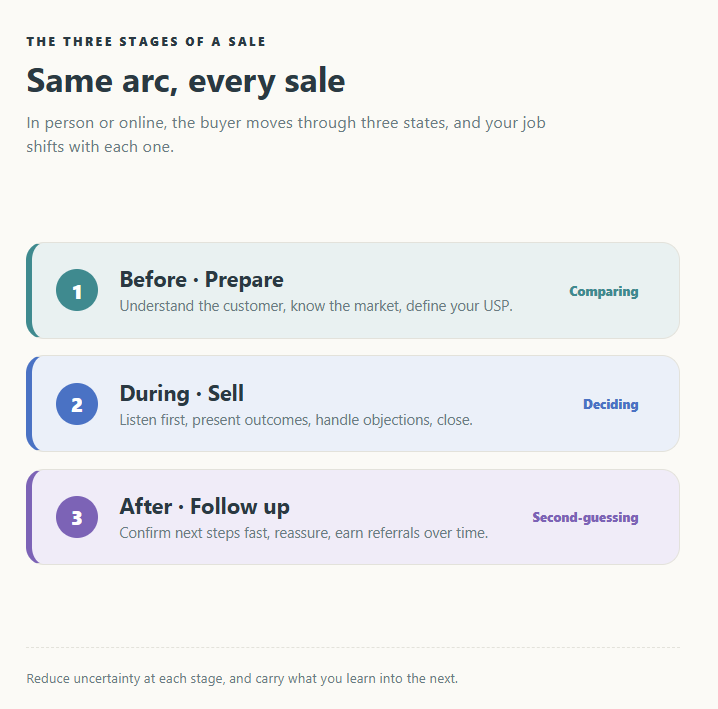
Before the Sale – How to Prepare to Sell a Product
Buyers rarely reject a product because of a single sales conversation. Hesitation comes from problems that existed before the conversation started, such as targeting the wrong audience, failing to understand customer expectations, or being unable to explain why the product is a better fit than the alternatives.
Understand Your Customer and Their Needs
Customers rarely describe their needs in a structured way. What they share is often shaped by urgency, partial understanding, or previous experiences. Effective preparation involves identifying pain points, priorities, and buying motivations beneath surface requests.
Customer understanding directly impacts selling outcomes. Research from Forrester shows that while many brands invest in outreach, only 7 percent manage to improve customer experience rankings. That gap usually appears when sellers engage without fully understanding what the buyer expects or values.
When sellers slow down to listen, patterns emerge. Goals become clearer. Constraints surface. The sales conversation becomes easier because relevance replaces assumption. This step alone strengthens every following step to sell a product.
Know Your Product and Market
Product knowledge goes beyond remembering features or pricing. To understand how to sell a product, sellers should know where the product delivers the greatest value, where it may not be the best fit, and how it compares with available alternatives.
A simple way to test this is to write your value proposition in one clear sentence. If a customer cannot easily explain why your product is different or worth choosing, the message is probably too complicated.
Study the Market and Competition
Before making a purchase, a customer will compare brands, prices, reviews, and alternatives to understand which option best meets their needs. Knowing the market helps sellers answer those comparisons with context rather than opinion.
Competitor research should focus on positioning instead of criticism. Understanding where competitors perform well and where your product creates additional value allows you to communicate honestly and build credibility throughout the sales conversation.
Adapt Your Preparation to the Sales Channel
Preparation varies depending on how and where the product is sold. A B2B sales team may spend more time defining the ideal customer profile, qualifying leads, and understanding business requirements. An ecommerce business, on the other hand, is more likely to focus on customer search behavior, product demand, reviews, and pricing trends.
Although the research looks different, the objective remains the same: build enough understanding before the first interaction to make every stage of how to sell a product successfully more relevant and effective.
During the Sale – How to Sell a Product Effectively
Preparation creates the opportunity, but the sales conversation determines whether that opportunity becomes a purchase. Every interaction shapes how buyers perceive the product and the business behind it. The objective is not to convince customers at every step, but to understand their concerns, demonstrate relevant value, and help them make a confident buying decision.
Make Contact and Build Rapport
The first few minutes of a conversation often set the tone for everything that follows. Buyers respond better when discussions feel focused, respectful of their time, and centered on their goals rather than a rehearsed sales pitch.
Building rapport does not require forced familiarity. It comes from listening carefully, communicating clearly, and creating an environment where buyers feel comfortable discussing their challenges. When trust is established early, the rest of the conversation becomes more productive.
Ask Questions and Listen Actively
Effective selling begins with curiosity. Instead of leading with product features, encourage buyers to explain their current situation, objectives, and pain points in their own words. Open-ended questions often reveal priorities that were not obvious at the start of the conversation. The more accurately you understand the buyer’s needs, the easier it becomes to explain how your product fits their situation.
Present the Product as the Right Solution
Once the buyer’s priorities are clear, connect your product to the outcomes they want to achieve. Customers are less interested in feature lists than in understanding how those features solve a problem, improve efficiency, reduce costs, or support business growth.
Personalizing the conversation makes those outcomes more relevant. IBM research found that personalized sales interactions can increase conversion rates by 22%, reinforcing the importance of tailoring recommendations instead of relying on a standard script. The same principle applies when discussing pricing strategies. Buyers are more likely to accept pricing when they understand the value they will receive rather than viewing cost in isolation.
Technology can also strengthen this stage of the sales process. Understanding which business cases are better solved by AI helps sales teams automate tasks such as research, lead qualification, and meeting preparation while reserving customer conversations and relationship building for human interaction.
Handle Objections With Confidence
Objections are a normal part of the buying process. Questions about price, timing, implementation, or product fit usually indicate that the buyer needs more information before making a decision rather than signaling a lack of interest.
Responding with facts, examples, and honest guidance builds confidence far more effectively than trying to overcome objections through pressure. Buyers are more likely to move forward when they feel their concerns have been acknowledged and addressed.
Recognize Buying Signals and Close Naturally
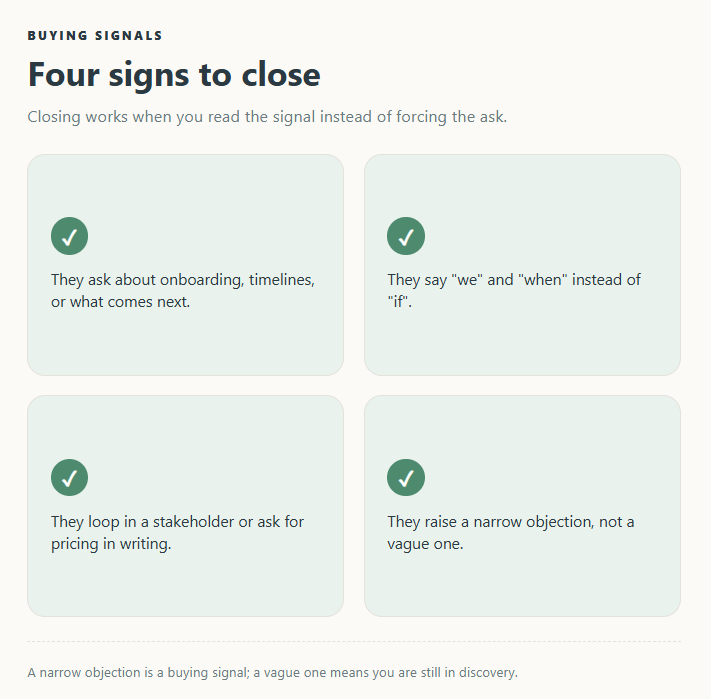
Closing a sale becomes much easier when the buyer is already demonstrating intent. Rather than forcing the conversation toward a decision, look for signals that indicate they are evaluating the practical next steps.
Common buying signals include:
- Asking about onboarding, implementation, or delivery timelines.
- Referring to the purchase using words such as “we” or “when” instead of “if.”
- Requesting a written proposal, pricing details, or commercial terms.
- Involving additional decision-makers or stakeholders in the discussion.
- Raising specific questions about implementation instead of general concerns about the product.
When these signals appear, focus on confirming the next steps and making it easy for the buyer to move forward. A natural close feels like the conclusion of a productive conversation rather than the result of pressure or persuasion.
After the Sale – Why Follow-Up Matters
Closing a sale marks the beginning of the customer relationship, its best not to term it as a conclusion. The experience immediately after purchase shapes how customers perceive your business, adopt the product, and decide whether they will continue buying from you.
Provide Clear Next Steps
Customers expect clarity once they commit to a purchase. Uncertainty about delivery, onboarding, or implementation can quickly replace the confidence they felt during the sales process.
A prompt follow-up should outline what happens next, who will be responsible, and when customers can expect progress. Even a simple confirmation email with timelines and contact details helps customers feel informed and supported from the outset.
Address Early Questions and Concerns
The first few interactions after a sale often determine how customers feel about their decision. Many questions at this stage are not about product features but about implementation, support, or knowing where to seek help if they encounter an issue.
Responding quickly and consistently reassures customers that assistance is available whenever they need it. This reduces uncertainty, strengthens trust, and encourages faster product adoption.
Personalize Every Follow-Up
Customers appreciate follow-ups that continue the conversation instead of starting over. Referring to previous discussions, agreed objectives, or earlier concerns shows that the business understands their needs and values the relationship.
A CRM makes this easier by keeping customer interactions, commitments, and conversation history in one place. Solutions such Calculus AI analyze customer activity, identify accounts that may need attention, and recommend appropriate next steps, allowing sales teams to provide more relevant and timely engagement.
Build Long-Term Relationships
Consistent follow-up creates opportunities that extend well beyond the initial purchase. Checking in after customers begin using the product, confirming that expectations have been met, and making it easy to request support all contribute to a better customer experience.
Businesses can also measure long-term satisfaction using metrics such as the Net Promoter Score (NPS) to identify loyal customers who are more likely to renew, recommend the product, or become advocates for the brand.
What Businesses Often Miss
Many businesses invest significant time and resources into winning new customers but give far less attention to what happens after the sale. As a result, avoidable problems such as unanswered questions, delayed onboarding, and inconsistent communication can weaken customer confidence before the relationship has had a chance to develop.
A simple follow-up during the first week after purchase can make a meaningful difference. It reassures customers that they have ongoing support, helps resolve issues before they escalate, and creates opportunities for repeat business and referrals.
Common Product Selling Techniques
Selling usually breaks down when a method is applied before the situation is understood. Conversations improve when the seller adjusts how they speak, listen, and respond based on what the buyer is dealing with at that moment.
Solution-Based Selling
Many sales conversations begin too early with a product. What helps more is staying with the problem a little longer. Buyers often describe symptoms before they describe the real issue. Time spent understanding where delays occur, what feels inefficient, or what keeps getting postponed changes the direction of the discussion.
Once the problem becomes clear in the buyer’s own words, the product enters the conversation naturally. Sellers who manage sales pipeline stages carefully tend to avoid repeating surface discovery, because each step reflects what was already learned rather than restarting the conversation.
Value-Based Selling
Price objections often appear when buyers cannot see what changes after the purchase. Numbers feel abstract until they connect to something concrete. Discussions become easier when buyers start linking the product to time saved, fewer errors, smoother handovers, or avoided rework. These ideas rarely land in a single conversation. Teams that follow a step by step sales process usually reinforce the same value points across interactions, allowing the buyer to internalise them gradually rather than defend against them.
Consultative Selling
Some buyers already know what options exist. What they struggle with is deciding which tradeoffs they can live with. Progress happens when questions help them think through priorities they have not fully articulated. The seller’s role shifts toward helping organise thoughts rather than presenting information. When earlier conversations remain visible and accessible, guidance stays consistent. This is where knowing how to use CRM for sales well makes a practical difference, because context is carried forward instead of being reconstructed each time.
Relationship-Based Selling
Not every sale ends at the moment of purchase. Many buying decisions depend on how interactions feel over time. Consistency matters more than persuasion here. Remembering details, following up when it makes sense, and staying aligned with changing needs gradually lowers friction. Over time, the buyer stops re-evaluating from scratch. Trust builds through continuity, and repeat decisions require less effort on both sides.
How to Sell a Product Online
Selling online is not simply about listing a product on a marketplace or launching an e-commerce website.
Different products require different buying experiences. Some customers are ready to compare prices and purchase immediately, while others spend days or even weeks researching before making a decision. Understanding how your customers evaluate products helps you choose the right sales channels, create better product pages, and support buyers throughout their journey.
Product Suitability With The Form Of Trade
Products that are familiar, easy to compare, or purchased regularly usually transition online with minimal friction. Buyers already understand what they need and focus on practical factors such as price, availability, delivery, and reviews.
Products that require greater investment or involve a more considered decision need additional support. Customers often compare alternatives, read reviews, leave to conduct more research, and return before purchasing. For these products, detailed information, demonstrations, customer testimonials, and educational content are just as important as product visibility.
Choose the Right Sales Channel
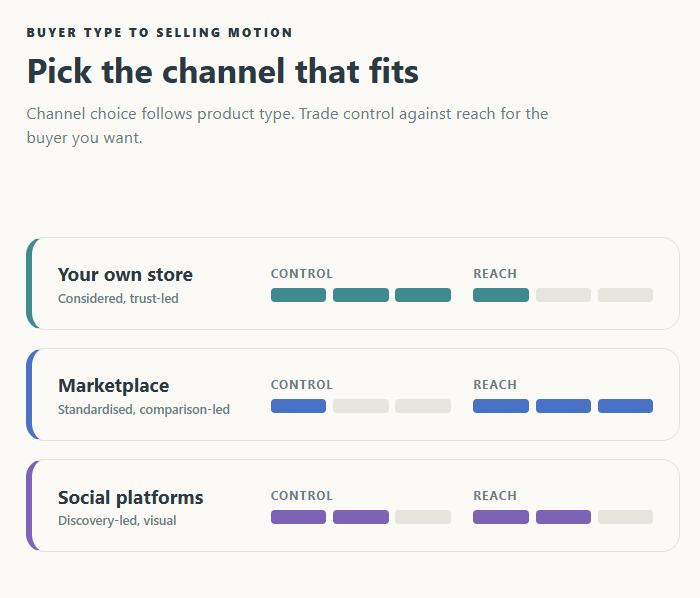
The best sales channel depends on the product, the target audience, and how customers prefer to buy.
Online marketplaces work well for standardized products where buyers expect to compare multiple sellers before making a purchase. Businesses entering highly competitive categories may also adopt penetration pricing to attract early customers and build market share, although long-term pricing should continue to reflect the value of the product.
An ecommerce website provides greater control over branding, customer experience, and product presentation. It is often the preferred choice for products that require explanation, demonstrations, or stronger brand differentiation.
Social commerce platforms are particularly effective for discovery-driven categories such as fashion, beauty, home décor, and wellness, where visual content and creator recommendations influence buying decisions.
Create Product Listings That Build Confidence
A product page should answer the questions buyers are most likely to have before they leave the page. High-quality images help customers understand size, texture, color , and real-world usage, while clear descriptions explain how the product solves a problem instead of simply listing specifications.
Businesses managing large product catalogs often use generative AI for business to create first drafts of product descriptions, titles, and feature summaries. And in view of that, human review remains essential to ensure the content reflects the brand voice, highlights genuine benefits, and remains accurate.
Promote Across Multiple Customer Touchpoints
Most online purchases are not completed during the first visit. Customers often discover a product through one channel, research it through another, and return later to complete the purchase. Maintaining consistent visibility across these interactions helps build familiarity and confidence without creating unnecessary pressure.
Social media introduces products and keeps them visible. Email marketing reminds interested buyers at the right time, while blogs, buying guides, and educational content help customers compare options and justify their decisions. Modern AI in marketing tools can coordinate these touchpoints by helping businesses personalize campaigns, recommend the next customer interaction, and automate routine marketing tasks while maintaining a consistent experience.
Read more about How CRM Helps Sales Team for a more organized view of the sales workflow.
Common Challenges When Selling a Product
Even experienced sales teams encounter stalled deals, delayed decisions, and lost opportunities. In many cases, these challenges do not emerge during negotiations. They develop much earlier, when buyers are poorly qualified, product value is unclear, or follow-up lacks consistency. Identifying these issues early makes them easier to correct before they affect conversion rates.
| Challenge | Why it happens | Early warning signs |
| Weak customer qualification | The ideal customer profile is not clearly defined, leading to conversations with buyers who lack the right need, budget, or decision-making authority. | Discovery conversations remain surface-level, and buyers struggle to connect the product to a genuine business need. |
| Feature-led selling | The conversation focuses on product capabilities instead of the customer’s use case or desired outcomes. | Buyers compare your product directly with competitors and see little meaningful difference between the available options. |
| Price objections | The product’s value has not been linked to measurable business outcomes, making price the easiest concern for buyers to raise. | Discussions repeatedly return to discounts or cost before buyers fully understand the expected benefits. |
| Trust gaps during the buying journey | Follow-ups are inconsistent, commitments are unclear, or conversations fail to build on previous interactions. | Buyers become slower to respond, involve additional stakeholders unexpectedly, or postpone decisions without a clear reason. |
Absolutely avoid:
One of the most common mistakes in the product selling process is introducing features before understanding the buyer’s actual requirements. When recommendations are made too early, customers often struggle to see how those capabilities relate to their own situation.
Instead, spend time understanding the buyer’s goals, challenges, and expected outcomes before presenting the product. Features become far more persuasive when they are connected to a specific use case rather than presented as a checklist. Otherwise, buyers are more likely to compare products on price alone because they have no meaningful context for evaluating the differences.
Best Practices to Sell a Product Successfully
Consistent performance comes from control over the process, not pressure on the buyer. When qualification, positioning, and follow-through are handled with intent, conversion improves without more activity.
| Practice | Why it works | Metric to watch |
| Define and enforce a clear ICP | Focuses discovery and cuts wasted cycles | Win rate, mid-funnel drop-off |
| Align value to buyer KPIs | Buyers justify decisions with numbers they track | Deal velocity, stage conversion |
| Maintain narrative consistency | Confidence drops when positioning shifts | Deal slippage rate |
| Be explicit about fit and scope | Clarity beats optimism at procurement | Post-sale churn, escalations |
| Treat follow-up as deal progression | Momentum and reliability move stakeholders | Time between stages |
These practices are most effective when every customer-facing team works from the same information and follows a shared sales process. Sales, marketing, and customer success teams that align their goals, customer data, and performance metrics through revenue operations are better equipped to deliver a consistent buying experience and identify opportunities for continuous improvement.
Frequently Asked Questions (FAQs)
Q1. How do you sell a product step by step?
Selling usually unfolds through qualification, discovery, positioning, validation, and commitment. The sequence matters because each step removes uncertainty. When the right customer is identified, needs are clarified, value is connected to outcomes, objections are addressed in context, and next steps are agreed upon, decisions move forward without friction. Follow-up completes the cycle and protects long-term value.
Q2. What are the most effective ways to sell a product?
Effectiveness depends on alignment rather than tactics. Sales perform better when the message reflects buyer priorities, timing matches urgency, and value is reinforced across interactions. Structured discovery, relevant examples, and consistent follow-through tend to outperform aggressive pitching, especially when buyers need internal justification before committing.
Q3. Why is understanding the customer important in selling?
Understanding the customer determines relevance. Budget, urgency, decision authority, and risk tolerance all shape how a product is evaluated. Without this context, conversations stay surface-level and stall later. When sellers understand what drives the buyer’s decision internally, messaging sharpens and resistance reduces before it becomes explicit.
Q4. How do you handle objections while selling a product?
Objections surface when something feels incomplete. Instead of countering immediately, effective sellers clarify what is behind the hesitation. Linking responses back to earlier discussions helps buyers reassess without feeling challenged. Most objections resolve when risk is reduced and expectations are aligned, not when arguments are intensified.
Q5. What role does trust play in selling a product?
Trust controls decision velocity. Buyers move faster when communication is consistent, commitments are precise, and information carries forward across conversations. Trust grows through reliability rather than persuasion. When credibility is established early, buyers stop rechecking details and focus instead on timing and implementation.
Q6. How can you sell a product online successfully?
Online selling succeeds when uncertainty is removed without conversation. Clear positioning, accurate visuals, and intent-aligned content help buyers evaluate independently. Multiple touchpoints support recall and confidence across time. The goal is not urgency, but clarity, allowing buyers to progress at their own pace without abandoning the decision.
Q7. What are common mistakes people make when selling products?
Common issues include weak qualifications, rushing discovery, and relying too heavily on features. Another frequent mistake is restarting conversations instead of building continuity. These gaps create friction late in the process, even when interest exists, because buyers feel misunderstood or unconvinced rather than opposed.
Q8. How important is follow-up after a sale?
Follow-up shapes how the decision is remembered. It confirms expectations, supports adoption, and signals accountability. Buyers often judge reliability after the sale, not during it. Consistent follow-up strengthens retention, enables expansion, and increases referrals, especially in relationship-driven or recurring revenue environments.
Q9. How do you sell a product without being pushy?
Pressure drops when clarity increases. Allowing space for evaluation, asking relevant questions, and sequencing conversations logically helps buyers stay engaged. Decisions feel less forced when next steps emerge from shared understanding rather than deadlines or repeated prompts.
Q10. What skills are needed to sell a product successfully?
Successful selling requires listening accuracy, situational judgment, and follow-through discipline. Asking the right questions matters more than delivering perfect explanations. Sellers who adapt to buyer signals, maintain consistency across stages, and manage momentum thoughtfully tend to outperform those relying on persuasion alone.