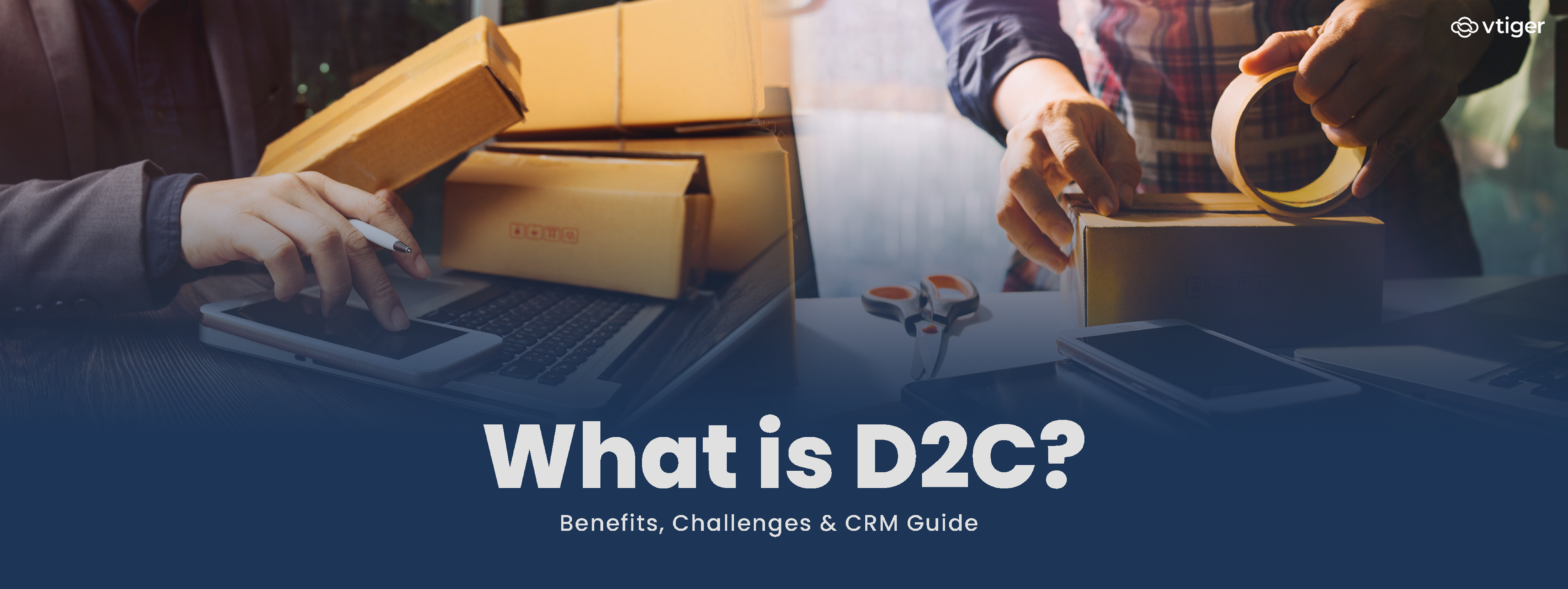
A brand that sells through shops knows how many units it shipped. A brand that sells directly can also know who bought them, what they purchased, when they came back, and which campaigns brought them in.
That difference lies at the core of the D2C model. It explains why direct selling has spread from categories such as mattresses and razors into food, clothing, electronics, pharmacy, and even industrial products.
That control comes at a cost, though. Every function a retailer once handled now has to be managed by the brand. Customer acquisition, inventory, fulfillment, returns, support, and retention all become part of the operating model.
That creates an important distinction between D2C brands. Some treat the additional margin as profit and spend aggressively on growth. Others treat it as the budget for the work that distributors and retailers used to perform.
This guide explains what D2C means, how the model works, where it creates an advantage, and where those advantages become expensive. It also looks at why customer data becomes increasingly valuable as the business grows, and where a CRM fits into that picture.
What Is D2C?
D2C stands for direct-to-consumer. It describes a business that makes its own products, or has them manufactured to its specifications, and sells them directly to the person who will use them. There is no intermediary wholesaler, distributor, or retail chain between the brand and the end customer.
The brand therefore controls marketing, transactions, fulfillment, and the after-sales relationship. That gives it considerably more visibility into the customer than a conventional wholesale arrangement.
D2C is not the same as e-commerce, although the two are often treated as interchangeable.
- A retailer selling several brands through an online store is running e-commerce, not D2C.
- A D2C brand selling through its own physical store is still operating a D2C model.
- A manufacturer selling through a marketplace may be selling online, but the marketplace still controls part of the customer relationship.
The simplest test is this: does the brand own the product and the customer relationship? Where the transaction happens is secondary.
The model itself is older than the internet. Manufacturers sold directly through catalogs long before websites existed. What changed was the economics of customer acquisition. Digital channels made it possible for a relatively small brand to reach a national audience without first negotiating a large distribution network.
How The D2C Model Works
The model looks simple from the outside, but the five connected stages below drive every direct sale.
- Product development – The brand designs the product or commissions it to a defined specification. The brand makes decisions about materials, quality, packaging, and price.
- Direct marketing – Demand is generated through websites, email, social media, paid advertising, search, creators, and other channels. This has become necessary in the parasocial era since third-party retailers do not contribute to audience engagement on digital channels and offline footfall on the brand’s behalf. There is no retailer generating footfall on the brand’s behalf.
- Direct sale – The transaction takes place through the brand’s website, app, or store. The brand controls pricing, promotions, and merchandising.
- Customer data capture – Every transaction can create a customer record containing contact details, purchase history, preferences, and behavioral information, subject to the appropriate permissions.
- Fulfillment and service – The brand manages picking, packing, shipping, delivery problems, returns, and customer support, either internally or through partners it manages.
The first three stages are usually the easiest to understand. The last two tend to determine whether the economics remain attractive as order volume increases.
A customer relationship management system becomes relevant here because the customer record starts accumulating information across all of these interactions.
Where D2C Fits Today
Pure D2C is becoming less common. A brand may begin with its own website, add marketplaces for reach, open physical stores for discovery, and eventually develop wholesale relationships when another channel makes economic sense.
That does not necessarily mean the direct model has failed. It usually means the brand has reached a point where relying on a single acquisition channel limits profitable growth.
The data challenge becomes harder at the same time. A customer might discover a brand through Instagram, purchase through its website, reorder through an app, and contact support through WhatsApp. The business needs to recognize that these are interactions with the same customer, not four unrelated events.
D2C Versus Traditional Retail
| Criteria | Traditional Retail | Direct-to-Consumer |
| Who sets the price | Retailer, within brand guidance | Brand |
| Who finds the customer | Retailer’s footfall and marketing | Brand, paid for per customer |
| Who holds the stock | Retailer buys and holds it | Brand holds it until sale |
| Who owns customer data | Usually the retailer | Brand |
| Gross margin | Shared across distribution and retail | Retained by the brand |
| Customer acquisition cost | Largely absorbed by retail network | Paid by the brand |
The margin row is what attracts founders to D2C. The acquisition row is what makes the model difficult.
A direct brand keeps a larger share of the selling price, but it also pays for the activities that bring the customer through the door. Advertising, fulfillment, returns, and support all come out of that retained margin.
The useful comparison therefore is not simply gross margin. It is what remains after the cost of acquiring and serving a customer has been accounted for across their entire relationship with the brand.
| Did you know? Selling online is still only one part of the retail market. The US Census Bureau reported that e-commerce accounted for 16.9% of total US retail sales in Q1 2026, with online sales growing 9.4% year over year compared with 3.9% for total retail. Digital commerce is growing faster, but most US retail spending still happens offline. |
Benefits Of The D2C Model
The case for D2C usually comes down to three advantages: better control over economics, direct access to customer information, and greater control over the customer experience. Each creates value, but each also brings additional responsibility.
Full Margin On Every Sale
Selling through distributors and retailers means the brand shares the final selling price across several parties. A direct sale removes those intermediaries and leaves the brand with the full retail revenue.
That additional margin can then fund customer acquisition, fulfillment, support, and retention.
This is where D2C economics can become misleading. The retained margin is not automatically profit. It also pays for functions that a retail partner would previously have handled.
Ownership Of Customer Data
A retailer knows that somebody purchased the product. Under a traditional wholesale arrangement, the brand may know little else about that person.
Direct selling changes that relationship. Subject to customer consent and applicable privacy requirements, every order can contribute information such as contact details, purchase history, product preferences, and interactions with the brand.
This information is known as first-party data, which is collected directly by the business from its own customers rather than purchased from an outside source.
The value is not simply having more data. It is being able to connect that information and use it to understand customer behavior. That becomes considerably easier when the data is organized through a CRM database.
Control Of The Whole Experience
A D2C brand decides how its products are presented, how an order is packaged, how the customer is contacted after purchase, and how complaints are handled.
That control removes some of the inconsistencies associated with third-party retail. A retailer cannot decide how your packaging looks or how your support team handles a return.
But control also means accountability. If delivery is late, the website is confusing, or the return process is frustrating, no retailer can absorb the customer’s dissatisfaction.
Challenges Of The D2C Model
The same control that makes D2C attractive also creates its biggest challenges.
Customer Acquisition Gets Expensive
Digital advertising gives brands access to large audiences, but those audiences are contested. As more businesses compete for the same placements, customer acquisition can become increasingly expensive. The brand pays for every new customer rather than relying on a retailer’s existing footfall.
Repeat Purchases Become Critical
If acquiring a customer costs more than the profit from the first order, the economics depend on what happens next.
That makes repeat purchase rate, customer lifetime value, and retention important operating metrics. A brand that measures only first-order revenue can mistake an expensive acquisition channel for a profitable one.
Operations Move In-House
Warehousing, picking, shipping, returns, and delivery problems become the brand’s responsibility. A logistics partner can handle the physical work, but the brand still has to manage the relationship and absorb the cost.
Returns can be particularly difficult in categories such as clothing, where reverse logistics and returned inventory directly affect margins.
Support Scales With Orders
More customers produce more questions. Delivery issues, product queries, exchanges, and complaints all require attention. The support workload therefore grows alongside sales unless the business invests in self-service, automation, and efficient customer service processes.
Competition Remains Open
The same low barriers that make D2C accessible also make it crowded. A brand can launch quickly, but so can its competitors. That makes differentiation, retention, and customer experience increasingly important once the initial acquisition opportunity has been exhausted.
Demand Has To Be Rebuilt
A retail shelf can continue generating sales without the brand actively paying for every customer who walks past it. A direct channel is more dependent on continuous demand generation. Pause the campaigns, lose visibility, or allow retention to decline, and revenue can fall quickly.
The First-Party Data Problem
Owning customer data is one of the strongest arguments for D2C. It is also one of the areas where brands often create the most operational mess.
Order records reside in the e-commerce system. Email analytics are stored within the marketing platform. Support conversations remain in a service inbox. Advertising data is controlled by third-party platforms.
Each system contains part of the customer story.
The business may technically own the information, but ownership is not the same as usability.
A simple question exposes the problem: Which customers bought a particular product last quarter but have not ordered since?
If the records are connected, that can be a saved segment. If they are not, someone may need to export several files, clean them, match customer records, and build a spreadsheet before answering it.
| Expert view: This is not limited to small D2C companies. Rob McLaughlin, co-founder and chief executive of AUDIENCES, has highlighted the operational complexity involved in connecting first-party data across fragmented systems. The problem is often not a lack of customer information, but the difficulty of turning information held in separate systems into something the business can actually use. |
That distinction matters as a brand grows. The more channels it adds, the more opportunities there are for one customer to appear as several disconnected records.
Why Every D2C Brand Needs A CRM
A CRM gives a business one structured customer record instead of leaving customer information scattered across individual tools. For D2C brands, this unified foundation drives four primary business outcomes.
- Centralize Customer Data
A central customer database can bring orders, customer interactions, support conversations, preferences, and returns together under one profile.
The advantage is not simply having somewhere else to store information. It is being able to answer a customer question or build a segment without first reconciling several systems.
That becomes increasingly valuable as order volume and channel count increase.
- Personalize Customer Engagement
Customer segmentation allows brands to group customers according to actual behavior.
First-time buyers, customers who purchase only during sales, people who bought once and disappeared, and high-value repeat customers should not necessarily receive the same message.
CRM email marketing can then deliver different campaigns to those groups without requiring someone to manually build every list.
The difficult part of personalization is rarely sending the message. It is identifying the right people to receive it.
- Improve Customer Retention
Retention often comes down to timing.
A customer buying a sixty-day consumable may need a replenishment reminder around day fifty. A customer who hasn’t purchased in six months may need a win-back campaign. Someone who had a delivery problem last week probably needs service before another sales message.
Lead nurturing sequences and automated follow-ups let these actions run from customer history rather than manually maintained spreadsheets.
- Connect Marketing, Sales, and Support
D2C brands often run marketing, sales, and support through separate tools. Each team therefore sees a different version of the customer.
A shared record changes that. Support can see what the customer bought. Sales can see previous conversations. Marketing can exclude customers who are currently dealing with an unresolved issue.
The same connection improves reporting. CRM analytics can connect acquisition campaigns with revenue and subsequent purchases, giving the brand a better view of channel quality.
How Vtiger CRM Helps D2C Brands
Vtiger One brings customer, marketing, sales, and support information into a shared CRM environment. For a D2C brand, the goal is straightforward: connect the campaign, customer, conversation, purchase, and support history rather than leaving each in a separate system.
What The Platform Covers
Customer records can hold interactions across channels, while segmentation helps brands group customers by behavior. Marketing automation can then run campaigns against those segments according to defined triggers and schedules.
Pipeline visibility also matters for D2C brands with sales teams handling larger accounts, corporate orders, or wholesale opportunities. Defined sales funnel stages show where an opportunity is tracked within the funnel while the customer history remains attached.
Support operates from the same customer context, reducing the need for agents to search across separate systems before answering a question.
Reporting closes the loop by connecting campaigns to revenue and repeat purchases. That gives D2C teams a clearer way to evaluate whether a marketing channel is producing customers who keep buying.
Why The Data Foundation Matters
Vtiger states that it serves more than 400,000 customers and that its platform is GDPR-compliant and ISO 27001 certified. For D2C brands, these claims matter because customer information is not simply a marketing asset. It also carries privacy and security responsibilities.
For businesses looking to bring CRM and AI capabilities onto a shared foundation, NextGen by Vtiger brings CRM applications together through a common data model.
The broader benefits of CRM therefore come from completeness. A customer segment built from half a customer’s history can look precise while still producing the wrong audience.
| Don’t miss this: First-party data is both an asset and an obligation. A D2C brand needs to know what permission a customer gave, what communication they agreed to receive, and how an unsubscribe should apply across its marketing activity. As the volume of personal information grows, access controls and consistent data handling become part of the operating model rather than an afterthought. |
Best Practices For D2C Brands Using CRM
A CRM only becomes useful when the underlying customer records remain reliable. These seven practices keep the system useful as the brand grows.
- Build one profile per customer. If someone orders using two email addresses, treat the records as one customer where the available information supports the match. Duplicate profiles make segmentation and reporting unreliable.
- Record the acquisition source at the order. Capture the source automatically wherever possible. A source added manually several days later is far more likely to be wrong.
- Segment before automating. First-time buyers, regular customers, and inactive customers should not automatically enter the same journey. Define the audience before creating the workflow.
- Automate time-sensitive follow-ups. Replenishment reminders, post-purchase messages, and win-back campaigns all depend on timing, making them strong candidates for automation.
- Log customer conversations centrally. A support exchange that remains inside a social inbox or individual email account contributes little to the wider customer record. Bring relevant interactions into the CRM.
- Review repeat purchase rate monthly. Retention changes gradually, so a quarterly review can hide a meaningful decline until it has already affected revenue.
- Measure customer value by channel. Cost per customer tells you what acquisition costs. It does not tell you what that customer becomes worth. Compare acquisition cost with repeat purchases and longer-term revenue.
Frequently Asked Questions
How does the D2C business model work?
A brand makes or commissions its own product, creates demand through its marketing, sells through channels it controls such as its website or app, captures customer information from each transaction with appropriate permission, and manages fulfillment and after-sales service, where an opportunity is tracked within the funnel while the customer history remains attached.
What are the benefits of D2C?
The brand keeps a larger share of the retail revenue, owns first-party customer data, and controls the customer experience. Those advantages give the brand greater visibility and control, but they also mean it carries the cost of customer acquisition, fulfillment, support, and retention.
What are the challenges of D2C?
Customer acquisition can become expensive as competition increases. Repeat purchases often determine whether the economics work because acquisition may cost more than the first order earns. Warehousing, fulfillment, returns, customer support, and demand generation also become the brand’s responsibility.
What is the difference between D2C and B2C?
B2C describes any business that sells to consumers. D2C is a narrower model in which the brand sells directly to consumers rather than relying on an intermediary such as a wholesaler or retailer. Every D2C business is B2C, but not every B2C business is D2C.
Why do D2C brands need a CRM?
D2C brands generate valuable first-party customer data, but that information often remains split across e-commerce, marketing, advertising, and support systems. A CRM connects those records so the business can understand customers, personalize engagement, manage retention, and measure channel performance.
How can CRM help D2C businesses grow?
A CRM makes repeat business easier to identify and manage. Segmentation shows which customers belong in each audience, automation handles time-sensitive follow-ups, and reporting helps identify the channels producing customers who continue buying rather than simply generating inexpensive first orders.
Is D2C more profitable than wholesale?
D2C can retain more margin per sale, but the brand also takes on costs that wholesalers and retailers previously absorbed. Profitability depends on customer acquisition cost, fulfillment costs, repeat purchases, and lifetime value rather than gross margin alone.
What data should a D2C brand collect?
With the appropriate consent and privacy controls, useful data includes contact details, order history, product preferences, customer interactions, returns, and acquisition source. Recording where customers came from is particularly important because it allows the brand to compare marketing channels based on subsequent customer value.